Forklifts are essential in warehouses, manufacturing facilities and distribution centers. They make it possible to transport heavy materials efficiently, but they also create serious risks for operators, pedestrians and anyone working nearby.
According to the UK's Health and Safety Executive (HSE), lift trucks are involved in approximately one in four workplace transport accidents. Preventing incidents requires more than operating instructions. Organisations need trained operators, maintained equipment, safe workplace layouts and employees who can recognize changing risks. This guide covers forklift hazards, essential rules, training, warning systems and human factors.
Why is forklift safety important in the workplace?
Forklifts are powerful machines used in spaces where visibility is often restricted and pedestrians may be nearby. Their considerable weight, changing center of gravity and frequent movements create the potential for serious incidents. A forklift overturning, a falling load or a collision with a pedestrian can cause severe injuries, damage equipment and interrupt production.
What makes forklift operations high-risk?
Unlike conventional vehicles, forklifts carry heavy loads in confined spaces. Their stability changes with the load's weight and position, while rear-wheel steering creates a wide rear swing that can endanger people nearby.
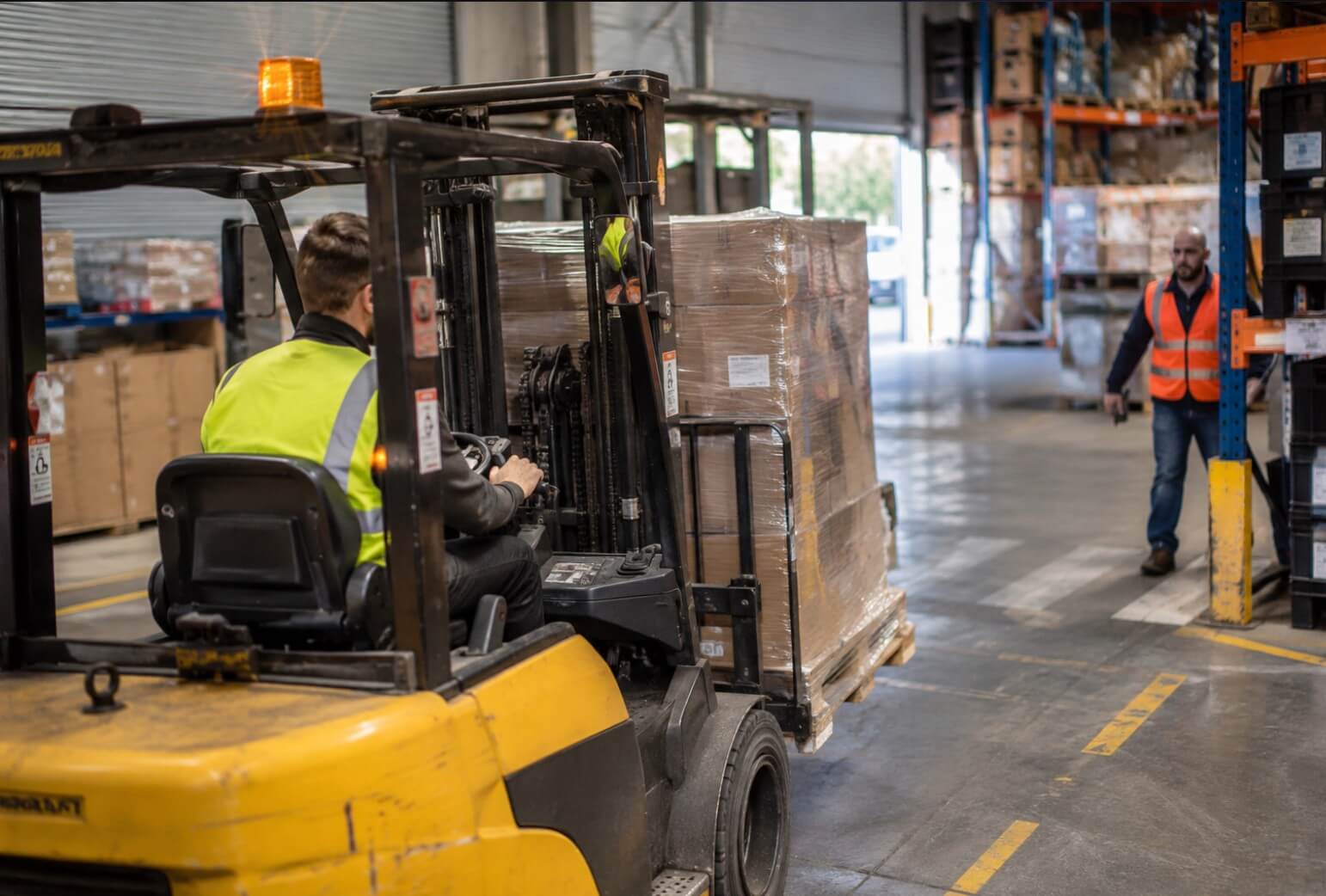
Consider a forklift approaching a warehouse intersection carrying a pallet that partly blocks the driver's view. At the same time, someone approaches from behind a storage rack. Without clear sightlines and suitable traffic controls, this routine movement can quickly become dangerous. Effective safety therefore addresses both equipment risks and the way people interact with the working environment.
What are the most common forklift safety hazards?
Hazards depend on equipment, workplace layout and the materials being handled. Seven common risks deserve particular attention:
- Forklift tip-overs. Excessive speed, sharp turns, uneven surfaces and unsuitable loads can affect stability. Operators must respect rated capacities and manufacturer instructions, particularly when using attachments.
- Falling or unstable loads. Poorly secured pallets, overloaded forks and loads carried too high can expose workers to falling materials.
- Pedestrian collisions. Where people and vehicles share routes, a worker can step into a forklift's path without realizing how close it is.
- Restricted visibility. Blind corners, high shelving, reversing movements and large loads can block the operator's view.
- Mechanical defects. Faulty brakes, worn tires, damaged forks or steering problems can compromise safe operation.
- Loading dock incidents. Unsecured trailers, damaged dock plates and unprotected edges can lead to falls or overturns.
- Unsafe floor conditions. Slippery surfaces, debris and uneven ground can reduce traction and affect stability.
Charging, refueling and maintenance introduce additional hazards requiring specific procedures and controls.
What are the essential forklift safety rules?
Clear procedures help prevent incidents when they are understood and consistently applied. These eight forklift safety rules provide a practical starting point, rather than a universal regulatory checklist.
- Use trained and authorized operators. Drivers must know their equipment and the hazards in their workplace.
- Inspect the forklift before use. Check its condition and report defects before starting work.
- Operate at a safe speed. Adjust to visibility, pedestrian movements, floor conditions and load stability.
- Handle loads correctly. Respect capacity limits, secure materials and travel with loads at the correct height.
- Maintain a clear view. Look in the direction of travel and follow approved procedures when loads obstruct visibility.
- Protect pedestrians. Respect designated routes, maintain distance and stop when someone enters the travel path.
- Follow site procedures. Observe traffic rules, use required restraints and never carry unauthorized passengers.
- Park securely. Lower forks, apply the parking brake and shut down according to manufacturer instructions.
Always apply these rules alongside the manufacturer's instructions and relevant legal requirements.
Daily forklift safety inspections
A pre-use inspection helps identify defects before they contribute to an incident. A practical forklift safety checklist should include:
- Brakes, steering and parking brake
- Tires, wheels and forks
- Mast, chains and hydraulic systems
- Controls, horn, lights and warning devices
- Operator restraints
- Visible damage, leaks and unusual noises
- Battery or fuel system condition
Check the work area as well as the truck. Any defect affecting safe operation should be reported and the equipment removed from service until repaired. Documenting inspections helps maintenance teams identify recurring problems. OSHA's powered industrial truck standard sets out requirements for examining trucks and removing unsafe equipment from service in US general industry.
Forklift safety for pedestrians
Pedestrian protection is particularly important where people work near moving vehicles. The UK's HSE fatal injury statistics for 2025 report an average of 21 worker deaths per year from being struck by a moving vehicle in Great Britain between 2020/21 and 2024/25. This covers moving workplace vehicles generally, not forklifts alone.
Where reasonably practicable, pedestrian and forklift routes should be physically separated. Barriers, designated walkways, controlled crossings and clear traffic plans reduce exposure. Mirrors, warning signs and high-visibility clothing can support those controls, but should not replace segregation. Both operators and pedestrians need to understand traffic arrangements at intersections, loading areas and blind corners. Read SafeStart's guidance on forklift and pedestrian safety.
What forklift safety training is required?
Forklift safety training helps operators understand equipment limitations, workplace hazards and safe procedures. Requirements vary by country, so employers must follow the rules applicable to their operations.
Why training needs ongoing reinforcement
Initial training is essential, but familiar tasks can become automatic. Even experienced operators may overlook changing risks when working under pressure or dealing with distractions. Short toolbox talks, practical observations and near-miss reviews help maintain awareness.
For instance, discussing a close call at a warehouse intersection can help employees identify visibility problems, pedestrian movements and possible traffic improvements. Encourage practical conversations instead of repeating generic warnings. See also SafeStart's strategies to improve forklift safety.
How do forklift safety lights and warning systems help prevent accidents?
Forklift safety lights and alarms can make moving equipment more noticeable, particularly where visibility is restricted. Common systems include:
- Blue spotlights: Project a spot on the floor to warn of an approaching truck.
- Red zone lights: Project boundary lines beside the vehicle.
- Flashing beacons: Help make moving equipment visible.
- Reversing alarms: Warn nearby employees when a vehicle moves backward.
- Horns and audible alerts: Support communication at blind corners and intersections.
Warning devices have limits. Projected lights can be difficult to see in bright settings, and alarms may blend into background noise. Employers should assess visibility, traffic density, noise and pedestrian routes before selecting equipment. Correct positioning, inspections and clear instructions are essential. Warning devices are supplementary controls, not substitutes for physical barriers, traffic management or safe speeds.
Beyond equipment and procedures: why human factors matter in forklift safety
Training, clear operating procedures, traffic separation and warning systems are all essential to forklift safety. But even when these measures are in place, incidents can still happen.
The challenge is that knowing how to work safely doesn't always mean we will act safely in every situation. An experienced forklift operator may know the correct procedures but occasionally overlook a hazard, misjudge a situation or react too late. The same applies to pedestrians working around moving vehicles.
This is where an approach like SafeStart can make a difference.
Traditional forklift safety training focuses primarily on operating equipment correctly, understanding hazards and following procedures. SafeStart complements this by focusing on the human factors that influence everyday decisions and behaviour, particularly during routine tasks when attention can slip.
Rather than simply reminding employees to be careful or follow the rules, SafeStart helps them recognize the circumstances in which critical errors become more likely and develop practical habits to prevent them. For forklift operations, this means helping drivers and pedestrians become more aware of their surroundings, recognize when they might be putting themselves in the line of fire and respond before a situation becomes dangerous.
The goal isn't to replace technical training or safety controls, but to address an additional layer of risk that equipment and procedures alone cannot fully manage.
Preventing critical errors and line-of-fire incidents
SafeStart identifies four critical error categories: eyes not on task, mind not on task, moving into or being in the line of fire, and losing balance, traction or grip.
Consider a pedestrian walking through a warehouse while looking at a phone. With eyes and mind distracted, they may step into an active vehicle route without noticing an approaching forklift. Similarly, a fatigued operator might overlook a person at a crossing, while someone near a loading dock may lose traction on a slippery surface.
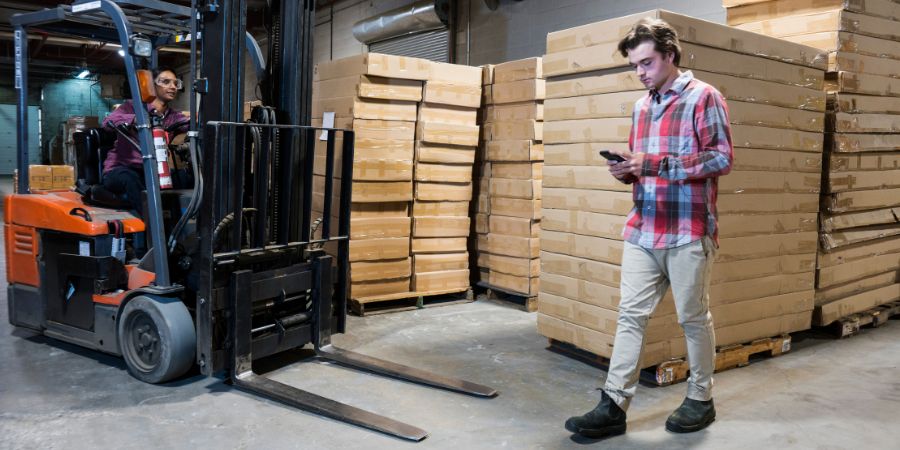
The objective is not to blame employees for mistakes. It is to understand when errors become more likely and build habits that help people recognize and respond to risk. Human factors training complements engineering controls, operating procedures, supervision and equipment-specific training rather than replacing them.
Frequently asked questions about forklift safety
What are the 8 rules of forklift safety?
Use trained operators, inspect equipment, maintain safe speeds, handle loads correctly, maintain visibility, protect pedestrians, follow workplace procedures and park securely. These are general guidelines, not a universal regulatory list.
What are 7 hazards associated with forklifts?
Seven common hazards are tip-overs, falling loads, pedestrian collisions, restricted visibility, mechanical defects, loading dock incidents and unsafe floor conditions.
What are the OSHA standards for forklift safety?
In US general industry, OSHA's primary powered industrial truck standard is 29 CFR 1910.178. It covers training, inspections, safe operation and maintenance. Other industry-specific rules may apply.
What is Rule 3 for forklifts?
There is no universally recognized Rule 3. In this article's checklist, Rule 3 is to operate at a safe speed appropriate to conditions.
Building a stronger forklift safety culture with SafeStart
Effective forklift safety depends on competent operators, well-maintained equipment, safe load handling and appropriate pedestrian protection. But everyday conditions such as fatigue, rushing and complacency can still affect people's ability to recognize hazards.
A strong safety culture encourages employees to identify risks, report close calls and discuss ways to improve their working environment. Managers must also address organizational conditions that make errors more likely.
SafeStart's human factors-based safety training helps employees recognize the four states, understand how they contribute to critical errors and develop safer habits. It supports existing safety systems rather than replacing them.
Want to strengthen your safety program beyond compliance? Explore SafeStart and discover how human factors training can support safer habits at work and beyond.
Published on 03.11.2026