

%20(2).png)

















Why Human Factors Matter in Retail Safety
Retail environments move quickly and involve constant movement, multitasking and repetition. Employees shift continuously between customer interaction, stock handling, deliveries and operational tasks, often while managing competing priorities at the same time. Because much of this work becomes highly familiar over time, many incidents happen during ordinary moments rather than unusual or high-risk situations.
Because much of retail work becomes highly familiar over time, many incidents happen during ordinary moments rather than unusual or high-risk situations. An employee rushing through a stockroom to support the shop floor may miss packaging left near a doorway while carrying stock and thinking about customer queues, while a fatigued worker nearing the end of a shift may become less aware during replenishment or delivery tasks.
In practice, these incidents are rarely caused by a lack of knowledge. Most employees already understand the correct procedure. The issue is that under pressure, attention narrows and people naturally fall back on habit and automatic behaviour.
This is where human factors become critical in retail health and safety. Mental and physical states such as rushing, frustration, fatigue and complacency affect awareness and decision-making every day, especially in fast-moving environments where operational pressure and repetitive work are constant. While organisations cannot completely eliminate these states, they can help employees recognise them earlier and respond more safely when they occur.
SafeStart focuses on developing the practical skills and habits that support safer automatic responses during real-world situations.
Common Retail Risks SafeStart Helps Address
Retail organisations face a wide range of operational risks across shop floors, stockrooms, loading areas, warehouses and transport activities. While these risks are often well understood from a compliance perspective, incidents still occur because everyday work conditions can gradually reduce awareness, especially when employees are fatigued, distracted or under pressure.
Slips, trips and falls
Slips, trips and falls remain one of the most common causes of workplace injury in retail. Wet entrances, congested aisles, stock left temporarily in walkways and poor visibility while carrying products all create exposure, particularly during busy trading periods when employees are moving quickly between tasks. According to the European Agency for Safety and Health at Work (EU-OSHA), more than 584,000 workplace accidents in Europe in 2019 involved slipping, stumbling and falling, highlighting how routine activities can still create significant operational risk.
.jpg)
Manual Handling and Repetitive Tasks
Much of retail work is physically repetitive, especially in stockrooms and replenishment activities where employees continuously lift deliveries, move cages and pallets, and reach overhead during shelving tasks. Over time, fatigue and repetition can gradually affect body positioning, awareness and decision-making, particularly during busy operational periods where speed becomes the priority.
Ladder and Equipment Use
Retail teams also regularly use ladders and step platforms during merchandising and replenishment activities. Because these tasks are highly repetitive, familiarity can gradually reduce awareness, especially when employees are fatigued or trying to complete tasks quickly.
.jpg)
Customer Pressure and Conflict
Customer-facing pressure also plays an important role in retail safety performance. Employees are often expected to manage difficult interactions, staffing shortages and operational demands while maintaining service standards. Under those conditions, frustration and cognitive overload can affect concentration and increase the likelihood of simple mistakes during routine activities.
Delivery Areas and Workplace Transport
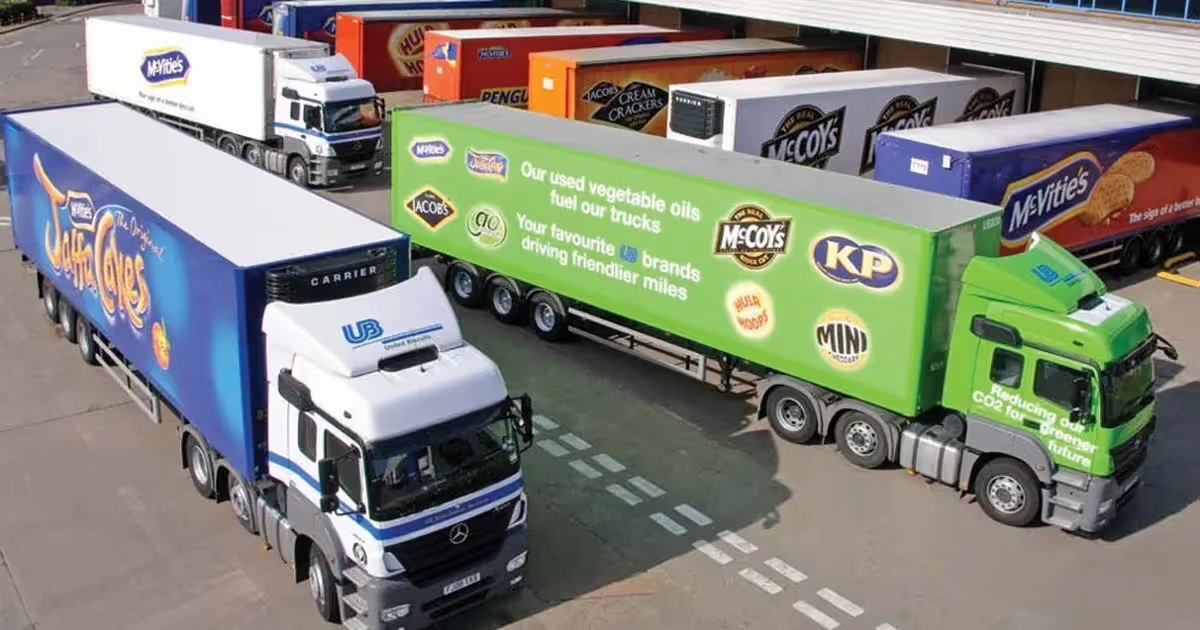
Loading bays, delivery zones and back-of-house operations create additional exposure involving moving vehicles, congestion, stock movement and time-sensitive activities. Under those conditions, employees may rush tasks, overlook hazards or lose awareness of line-of-fire risks while focusing on operational demands.
Driving Between Stores and Locations
Regional managers, operational leaders and delivery teams may spend significant time travelling between stores, offices or distribution centres. Fatigue, distraction and rushing can affect driving performance in the same way they affect workplace safety, which is why SafeStart connects workplace awareness with driving safety and everyday risk reduction.
Building Safer Habits Across Retail Teams
Retail safety is not only a frontline issue because long-term improvement depends on consistent behaviours across stores, warehouses, leadership teams and support functions. In large retail organisations, one of the biggest challenges is maintaining that consistency across different locations, teams and operational pressures, especially when turnover is high and many employees work seasonal or rotating schedules.
SafeStart helps organisations create a shared understanding of human factors and risk awareness across all levels of the business. Rather than relying only on one-time training sessions, the programme reinforces practical awareness and safer habits continuously over time, which helps employees apply safer behaviours more naturally during everyday work.
This approach supports frontline retail staff, store managers, warehouse and logistics teams, regional leadership and EHS professionals because everyone shares the same language around risk recognition and safe decision-making. As a result, organisations can strengthen safety culture across multiple locations while supporting operational consistency in fast-moving retail environments.
Building Safer Habits at Work, at Home and on the Road
One reason SafeStart resonates strongly with retail teams is because the concepts apply beyond the workplace. The same human factors that contribute to workplace incidents can also affect people while driving, commuting or managing everyday activities at home, which makes the training feel personally relevant rather than simply another workplace requirement.
Employees develop practical habits such as slowing down before stepping from ladders, maintaining awareness while carrying stock, recognising fatigue before driving home and resetting focus after stressful customer interactions. Because these behaviours are reinforced regularly, they become easier to apply naturally during everyday situations both inside and outside work.
A Practical Retail Safety Training Programme for Long-Term Culture Change
Many organisations already have strong retail health and safety procedures, onboarding programmes and compliance training in place. The challenge is maintaining safe behaviours over time, especiall in retail environments where operational pressure, repetition andhigh-volume trading periods familiarity can gradually reduce awareness.
Traditional training often struggles because information fades while employees naturally drift back into automatic behaviour patterns. This becomes even more difficult in environments with high turnover, seasonal staffing and constant operational demands.
SafeStart focuses on long-term habit development rather than one-time knowledge transfer. Through repeated reinforcement and practical application, employees build safety skills they continue applying long after training ends.
As safer responses become more natural during everyday work, organisations are better positioned to reduce preventable injuries, strengthen operational consistency and build a more resilient safety culture across locations.
.jpg)