%20(1).png)
















%20(1).jpg)
Why Manufacturing Health and Safety Training Matters
Manufacturing environments combine multiple high-risk factors:
- Machinery and automation
- Hazardous substances and chemical exposure
- Manual handling and repetitive strain
- Electrical systems and stored energy
- Noise, heat, and environmental hazards
Manufacturing continues to record some of the highest injury rates in Great Britain. According to the UK Health and Safety Executive (HSE):
- 50,000+ self-reported work-related injuries occur annually in manufacturing
- 30–40% of work-related ill health cases are musculoskeletal disorders, often linked to repetitive tasks and manual handling
- 15–20% of all fatal workplace injuries occur in manufacturing, despite the sector employing a smaller share of the workforce (8%)
These figures exist alongside well-established regulations, machine guarding standards, and mandatory training requirements. This suggests that while technical controls and compliance frameworks are essential, they do not eliminate risk entirely.
In manufacturing environments, work is often repetitive, time-sensitive, and physically demanding. Over the course of long shifts, attention can fluctuate. Under production pressure, small shortcuts can feel justified.
In high-reliability manufacturing environments, even a single lapse in attention can result in a serious injury or fatality. Many organisations find that after years of compliance improvement, incident rates plateau. The remaining risks are rarely procedural, they are behavioural.
What Kind of Training Is Required for Manufacturing?
Manufacturing health and safety training must cover both legal compliance and operational risk control. In the UK, employers are required under the Health and Safety at Work Act to ensure employees are competent and properly trained for their roles. In manufacturing environments, this typically includes:
Core Training Requirements
- Induction and general health and safety awareness
- Risk assessment training
- Manual handling training
- COSHH training for hazardous substances
- Machine safety and PUWER compliance
- Lockout/Tagout (LOTO or LOTOTO) procedures
- Fire safety and emergency response
- Working at height training, where applicable
However, training requirements alone do not guarantee consistent safe behaviour. In manufacturing settings, risk exposure often occurs not because someone lacks knowledge, but because attention fluctuates, production pressure increases, or routine tasks reduce perceived risk.
Effective manufacturing safety training must therefore combine technical competence with reinforcement that supports performance under real-world conditions.
The Leading Causes of Fatal Injuries in Manufacturing
According to UK HSE data, the most common causes of fatal injuries in manufacturing are:
- Falls from height (22%)
- Struck by moving or falling objects (19%)
- Contact with moving machinery (17%)
- Trapped by collapsing or overturning materials (10%)
- Struck by moving vehicles (10%)

These categories reflect environments where energy, movement, gravity, and load stability intersect. What they also share is exposure that often increases during maintenance, production pressure, material handling, or routine tasks where familiarity reduces perceived risk.
The Most Common Non-Fatal Injuries in Manufacturing
While fatal injuries highlight severe risk exposure, non-fatal injuries reveal where everyday operational risk accumulates. According to UK HSE data, the leading causes of non-fatal injuries in manufacturing are:
- Slips, trips and falls on the same level : 24%
- Handling, lifting and carrying : 20%
- Struck by moving object : 14%
- Contact with moving machinery: 12%

When we look beneath these categories, common error patterns begin to emerge.
- Many slips and falls occur when someone loses balance, traction, or grip — often while moving quickly, carrying loads, or navigating congested areas.
- “Struck by” incidents frequently involve someone stepping into a line-of-fire position, misjudging distance, or assuming equipment has stopped moving.
- Manual handling injuries often happen when posture changes slightly, when someone lifts without full focus, or when repetition reduces attention.
The Biggest Safety Challenge Manufacturing Companies Face
Manufacturing hazards are not hidden. Moving machinery, heavy components, forklifts, elevated platforms, and stored energy are all visible and well understood. Procedures exist. Guards are installed. Training is delivered.
When we examine incident patterns, recurring themes emerge. Workers enter line-of-fire positions. They lose balance, traction, or grip while moving materials. They assume equipment is isolated rather than verifying it. Attention drifts during repetitive tasks.
These patterns are rarely caused by a lack of knowledge. More often, they reflect how human performance and reaction shifts under production pressure, fatigue, repetition, and time constraints.
The biggest safety challenge in manufacturing is maintaining consistent performance in environments that demand speed, precision, and repetition. When production pressure increases, human factors become the variable that determines whether systems hold or fail.
Why Traditional Manufacturing Safety Training Isn’t Enough
Traditional manufacturing safety training focuses on building knowledge and ensuring compliance. Employees attend induction sessions, complete online modules, review procedures, and participate in toolbox talks. These elements are necessary. But they assume that once someone understands the rule, they will consistently apply it.
In reality, knowledge does not override fatigue.
Procedures do not eliminate rushing.
Policies do not prevent complacency.
Without reinforcement and habit-building, training remains theoretical. It prepares people for ideal conditions and not for the real-world moments when attention narrows and small deviations lead to injury.
How SafeStart Strengthens Manufacturing Safety Training
SafeStart strengthens manufacturing health and safety training by addressing the human factors behind serious injuries.
Rather than adding more procedures, SafeStart develops the skills that help people perform safely whatever state of mind they are in. Through practical repetition, teams learn to recognise when rushing, fatigue, frustration, or complacency are influencing decisions — and interrupt those patterns before they lead to critical errors.
Over time, safer responses become more instinctive. Maintaining safe positioning becomes habitual. Adjusting balance, traction, and grip becomes second nature. Safety shifts from something people try to remember, to something they naturally do.
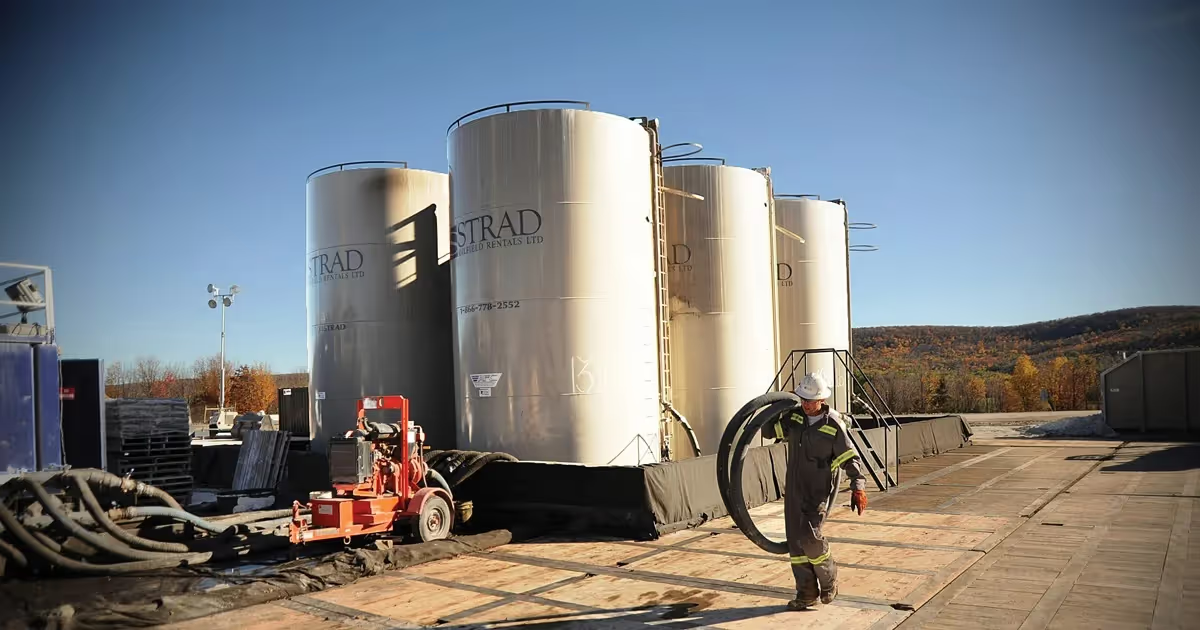
SafeStart has been especially effective in Strad’s manufacturing operations, helping drive down their TRIF by an impressive 87%
But it’s more than numbers Talking with peers about safety is “a chance to save lives ” - Shane Hopkie, COO of Strad Energy Services
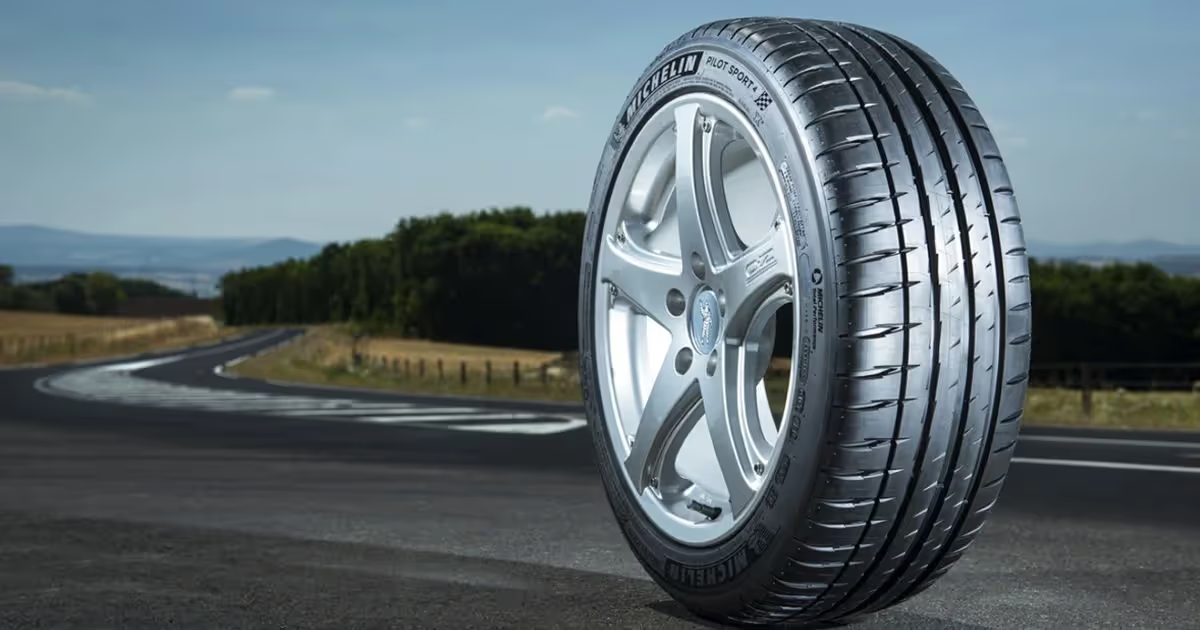
Another success story is with Michelin Brazil who implemented SafeStart across its tyre manufacturing operations after experiencing a rise in incidents despite strong technical systems. Within two years, the company achieved a 68% reduction in accidents while strengthening a shared safety culture across its workforce.
That’s the difference between knowledge-based training and behaviour-based performance.
In manufacturing, operational excellence and safety excellence are inseparable. When human performance improves, reliability improves. When attention improves, quality improves. And when safety becomes instinctive, injuries decline.
Curious? Watch the explainer video below or reach out to schedule a presentation!
.jpg)