
.webp)
What Are Human Factors in Health and Safety?
When people search for a human factor definition, they're usually looking for a clear explanation of what influences behaviour at work.
The human factor meaning is straightforward.
Human factors describe how people interact with systems. That includes tasks, equipment, procedures, environments and organisational decisions. It recognises something very basic. We are human. We get tired. We feel pressure. We get distracted. We form habits. We adapt to risk.
So what is human factor in practical terms? It means performance changes depending on physical state, mental focus and the conditions around us.
Most people assume serious mistakes are rare. They are not. Research suggests the average person makes around 80 mistakes per day. Most are minor. A missed step. A forgotten action. A momentary lapse in attention. We rarely notice them because nothing serious happens.
But when one of those small lapses happens around hazardous energy, the outcome can be very different.
Human factors in health and safety accept that error is constant. The goal is not to eliminate human error entirely. That is unrealistic. The goal is to reduce the chance that predictable human mistakes turn into injuries.
A procedure can be technically correct. A worker can be fully trained. But if they are rushing, fatigued or complacent, the risk increases. That's why human factors in safety are not about blaming people. They are about designing work and leadership systems that account for predictable human behaviour.
Instead of asking, “Who made the mistake?” we need to ask , “What conditions made the mistake more likely?” That shift moves safety from compliance to prevention.

The Human Factors That Influence Safety at Work
Human factors in health and safety do not sit in one place. They operate at several levels, and they influence each other. Understanding those levels helps organisations move from reacting to incidents to preventing them.
Individual Human Factors
Individual human factors start with something simple: We’re human.
We get rushed. We get frustrated. We get tired. And sometimes we get so used to a task that we stop seeing the risk. When that happens, small things change.
Our eyes drift for a second. Our mind moves ahead to the next job. We step without checking footing. We grab without thinking about grip. Nothing feels dramatic. It just feels normal. That’s the point.
Most human factor examples are not reckless decisions. They’re everyday lapses. A quick shortcut because “it’ll only take a second.” A task done on autopilot because we’ve done it a hundred times before.
If we ignore individual human factors, we are basically expecting people to perform perfectly no matter how they feel or what pressure they’re under. That’s not realistic. The smarter approach is to accept that human states change, and design safety around that reality.
Job and Task Factors
Job factors influence how much mental capacity a person has available to perform safely.
Leadership priorities, targets and resource decisions shape daily behaviour. Safety culture affects whether concerns are raised or kept quiet. Communication determines whether critical information is understood clearly. Incentives signal what truly matters.
Even well-designed systems can fail if they assume people will always perform consistently regardless of context. When leaders evaluate job factors in safety, they must ask whether tasks are designed around human capability or around ideal performance. The difference determines whether safety controls are realistic or fragile.
Organisational Factors
Organisational factors often have the biggest influence. Leadership priorities, targets and resource decisions shape daily behaviour. Safety culture affects whether concerns are raised or kept quiet. Communication determines whether critical information is understood clearly.
When production and safety seem to compete, behaviour adjusts to perceived expectations. When reporting leads to blame, issues stay hidden. When supervision focuses only on outcomes and not conditions, early warning signs are missed.
Human factors in safety are shaped from the top down as well as from the individual up.
Addressing organisational factors means recognising that behaviour is influenced by system design, leadership signals and culture. It changes the conversation from “Why did they do that?” to “How did our system allow that?”
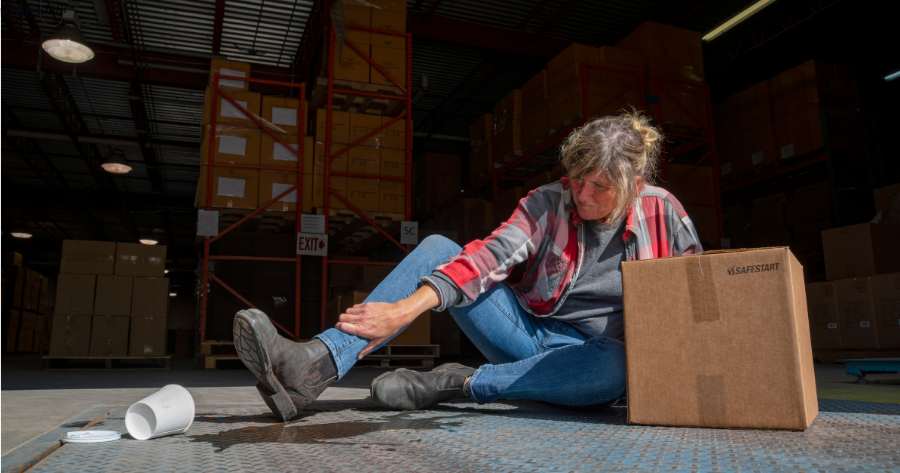
Human Error in Safety Incidents: Why It Keeps Happening
Human error in safety incidents persists because it is often misunderstood.
In many investigations, the immediate cause is labelled as “operator error” or “failure to follow procedure.” While technically correct, that does not explain why the mistake happened.
There is an important difference between error, at-risk behaviour and violation. Most incidents involve unintentional error or behaviour shaped by pressure and familiarity. Very few involve deliberate disregard for safety.
Knowledge alone does not prevent mistakes. A trained worker who is tired still loses focus. A supervisor under pressure may rush. A familiar task may feel safe simply because nothing has gone wrong before.
Human factors recognise that these conditions are predictable. If they are predictable, they can be anticipated and managed. When they are ignored, repeat incidents are not surprising. They are signals that human performance has not been fully addressed.
What Are the 5 Elements of Safety?
A mature safety strategy rests on five interconnected elements: people, systems, leadership, culture and environment.
.png)
People bring their skills, habits and attention to the workplace. Systems provide structure through procedures and safeguards. Leadership sets expectations and allocates resources. Culture shapes how decisions are made under pressure. The environment influences how easily safe behaviour can be performed.
Human factors connect all five.
If people are not trained to recognise when their attention is compromised, systems alone will not compensate. If leadership signals conflict between safety and production, culture will follow that signal. If the environment makes safe behaviour difficult or awkward, shortcuts will emerge.
Why Traditional Safety Approaches Still Leave Gaps
Most organisations already go beyond basic compliance. They run Behaviour Based Safety programmes, conduct observations and promote reporting. These efforts are valuable.
However, even mature systems often see improvement stall. Why? Because knowing what safe behaviour looks like is not the same as consistently applying it in the moment.
That gap remains when organisations focus on observing behaviour but do not build the personal skills required to manage human state under pressure.
How SafeStart Addresses Human Factors Differently
SafeStart focuses on the conditions that influence behaviour before an incident occurs. Instead of observing behaviour after the fact, it develops personal capability. People learn to recognise when rushing, frustration, fatigue or complacency are increasing risk and apply practical techniques immediately.
This shifts safety from observation to anticipation.
SafeStart strengthens the human element inside existing systems. Organisations implementing this methodology have reported sustained injury reductions, often between 30 and 70 percent, alongside improved engagement and operational reliability. When human factors are addressed at the source, performance improves.
Why Human Factors Are (also) a Leadership Responsibility
Human factors are often treated as frontline issues. At other times, they are framed purely as leadership issues. In reality, they operate at every level of an organisation.
Individuals manage their own attention, fatigue and decision-making. Supervisors influence daily priorities and pace. Operational teams shape how procedures are applied. Leadership sets expectations, allocates resources and defines what truly matters.
Human performance is shaped by both personal state and organisational conditions.
When individuals understand how rushing, frustration or complacency influence them, risk decreases. When supervisors reinforce those behaviours consistently, reliability improves. And when leaders design systems that account for predictable human limitations, safety becomes more resilient.
Human factors are therefore not owned by one group. They require alignment across the organisation. When that alignment exists, safety moves from reactive control to sustainable performance. And we can then build a sustainable safety culture.
Reducing Human Error Starts with Human Factors
Reducing human error in safety incidents requires recognising predictable human conditions and building behavioural capability to manage them. SafeStart provides a structured methodology to integrate human factors into everyday operations.
For organisations ready to move beyond compliance and build lasting safety maturity, the starting point is managing these human factors.