.png)
















.jpg)
What Is Health and Safety in Engineering?
Health and safety in engineering refers to the structured management of risks associated with technical work, industrial environments, and complex systems.
This includes:
- Compliance with legal frameworks such as the Health and Safety at Work Act
- Safe systems of work and permit controls
- Mechanical and electrical risk management
- Competency-based training
- Ongoing monitoring and continuous improvement
Engineering health and safety must account for the technical and high-hazard nature of the work. Tasks often involve:
- Rotating machinery
- High-voltage systems
- Stored mechanical or electrical energy
- Heavy or suspended loads
- Confined or restricted spaces
Compliance establishes minimum standards. But performance determines real-world outcomes. Engineering health and safety is not only about documentation. It is about how consistently procedures are followed when conditions change, pressure increases, or fatigue sets in. That distinction between compliance and performance is where most serious incidents originate.
Common Engineering Hazards
Common health and safety risks associated with engineering and manufacturing roles include (but are not limited to) the following.
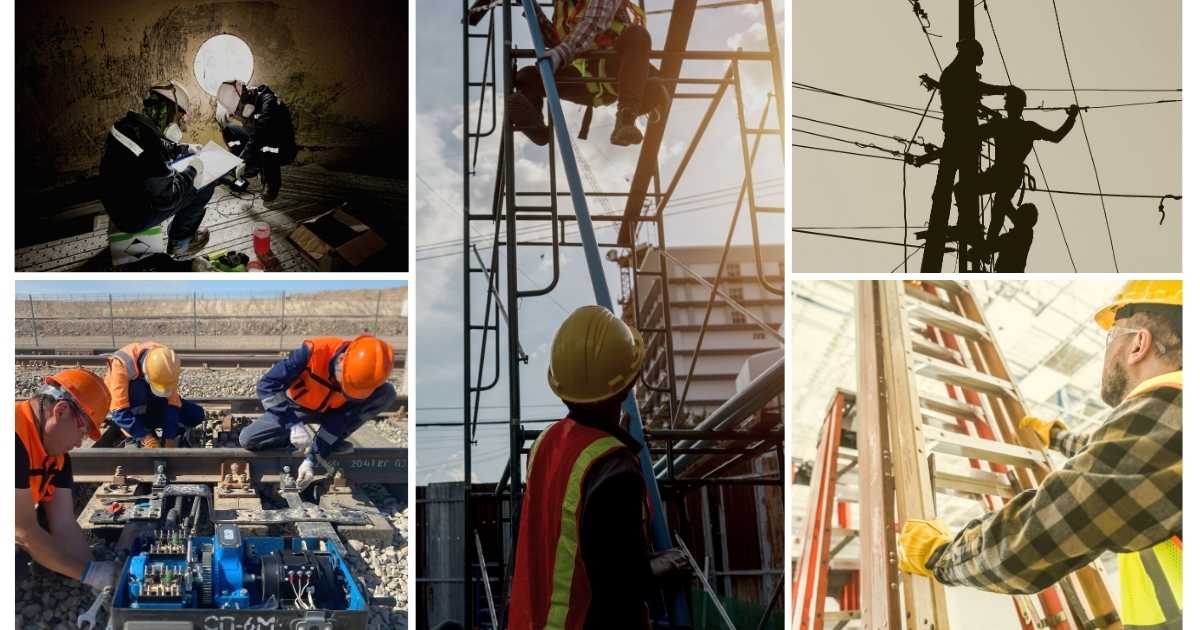
Mechanical Hazards
- Moving or rotating machinery
- Pinch points and entanglement
- Crushing or impact risks
- Stored mechanical energy
Electrical Risks
Health and safety in electrical engineering includes exposure to:
- High-voltage systems
- Arc flash and arc blast
- Inadequate isolation
- Lockout and tagout failures
Working at Height
Maintenance and installation tasks frequently require access platforms, ladders, or scaffolding.
Confined Spaces
Engineering operations often involve tanks, pits, ducts, and restricted environments where ventilation and access are limited.
Fatigue and Human Error
Extended shifts, precision tasks, and technical troubleshooting create cognitive strain. When attention narrows or familiarity increases, small lapses can escalate quickly in high-energy environments.
Engineering hazards examples often focus on equipment failures. But many incidents stem from predictable human factors rather than system breakdowns.
Why Traditional Engineering Health and Safety Programmes Fall Short
Most engineering health and safety programmes are built around:
- Detailed procedures
- Permit-to-work systems
- Toolbox talks
- Compliance audits
- External engineering health and safety consultants
These elements are essential foundations. However, they assume that once procedures are defined, they will be followed consistently. In reality, performance fluctuates.
When engineers are rushing to meet maintenance windows, fatigued after long diagnostics, or overly confident with familiar systems, attention can drift.
.jpg)
Traditional systems rarely address these performance variables directly.
That is why many organisations experience a plateau in safety improvement despite strong compliance frameworks.
Moving Beyond Compliance to Sustainable Safety Performance
Engineering organisations face increasing pressure from regulators, insurers, clients, and ESG frameworks. Improving engineering health and safety is not only about avoiding penalties. It impacts:
- Operational uptime
- Equipment reliability
- Project timelines
- Reputation and stakeholder confidence
Organisations that move beyond checklist compliance and address human performance can expect:
- Fewer serious injuries
- Reduced downtime
- Stronger safety culture
- Greater leadership credibility
Sustainable safety performance requires both strong systems and consistent behavioural awareness.
Improve Engineering Health and Safety with SafeStart
If your organisation already has strong health and safety systems in place but still experiences injuries or performance variability, the missing layer may be the human factors dimension.
SafeStart improves safety by addressing the subconscious human factors that drive errors in high-risk technical environments. Rather than focusing only on recognising unsafe situations, we help teams understand the mental and physical states that influence decisions in the moment and build skills and habits that make safer responses automatic.
Used by over 3,500 companies worldwide, SafeStart consistently delivers:
- 30–50% fewer injuries in the first years
- Reduced downtime and operational disruption
- Stronger, more engaged safety cultures
That’s the difference between compliance-based training and behaviour-based performance. Because injuries don’t stop at the workshop door. SafeStart builds safety awareness that lasts 24/7 — at work, on the road, and at home.
As seen at Atlantica Rioglass:
“2024 was our best safety year since records began. It’s no coincidence that it was also our first full year with SafeStart.”
— Myriam Julia Campos, Director of the Solucar Platform
If your organisation is ready to move beyond procedures and improve real-world performance, SafeStart can help.
>> Book a consultation with a SafeStart Expert
Or watch a real safety story video: