Working at height is something millions of employees do every day. From construction workers on scaffolding to maintenance technicians using ladders, it's a routine part of many jobs. But routine doesn't mean risk-free. Even a fall from a relatively low height can result in a serious injury.
What is working at height?
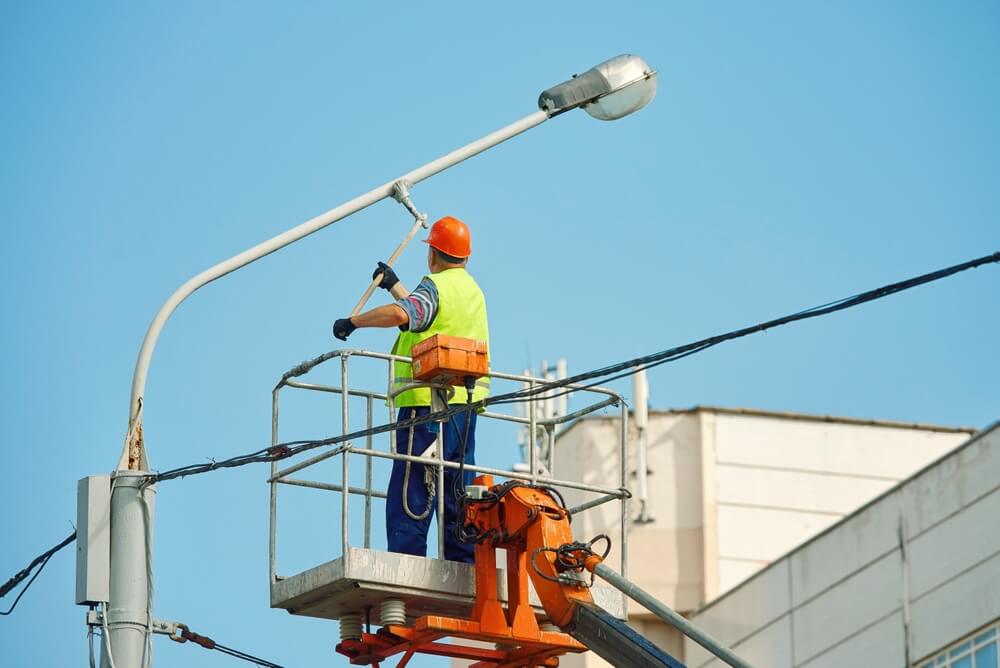
Working at height generally means carrying out a task where there's a risk of falling from one level to another and getting injured. That could mean working on a roof, climbing a ladder, using scaffolding, or accessing an elevated platform.
And contrary to what some people assume, there isn't a single height at which work suddenly becomes dangerous.
The legal requirements vary depending on where you work. For example:
- In the United Kingdom, the Work at Height Regulations 2005 apply wherever someone could fall far enough to cause personal injury. There's no universal minimum height.
- In the United States, OSHA generally requires fall protection at 4 feet (1.2 meters) in general industry and 6 feet (1.8 meters) in construction, although different rules and exceptions apply to certain activities.
The point is that a relatively short fall can still cause a serious injury. So rather than focusing only on how high someone is working, employers need to consider the task, the environment, and what could happen if something goes wrong.
What are the 10 most common hazards when working at height?
Falls are the obvious concern, but plenty of different situations can lead to one. Some hazards are easy to spot, while others develop as the job progresses.
Here are ten common hazards worth looking out for:
- Unprotected edges: Roofs, platforms, or elevated walkways without suitable guardrails.
- Floor openings: Uncovered holes or poorly secured covers that someone could fall through.
- Fragile surfaces: Skylights or roof panels that look solid but can't support a person's weight.
- Unstable platforms: Scaffolding or work surfaces that haven't been properly installed or secured.
- Unsafe ladders: Using the wrong ladder, positioning it incorrectly, or placing it on uneven ground.
- Damaged equipment: Ladders, platforms, anchors, or fall protection systems that are worn or defective.
- Overreaching: Stretching too far instead of repositioning equipment, increasing the risk of losing balance.
- Falling objects: Tools or materials that could strike someone working below.
- Bad weather: Wind, rain, ice, or poor visibility that make elevated work more dangerous.
- Human factors: Rushing, fatigue, frustration, distraction, or complacency that can affect attention and decisions.
Of course, these hazards don't always occur separately. Imagine someone using a ladder on slightly uneven ground while rushing to finish a job. Each additional factor makes an already risky situation more difficult to manage.
And that's something worth remembering. A risk assessment completed before work begins can't always predict everything that will happen during the task.
What are the essential safety rules for working at height?
There's no shortage of rules and regulations covering elevated work. But most fall prevention programs come back to a few basic principles: plan the job properly, use suitable equipment, and make sure employees know how to work safely.
First, can the work be done from the ground?
Before anyone climbs a ladder or steps onto a platform, it's worth asking whether the task needs to be done at height in the first place.
If it can reasonably be completed from ground level, that's usually the safest option. When elevated work can't be avoided, the next priority is preventing a fall. Guardrails, properly installed scaffolding, and suitable elevated work platforms can all help.
And where the risk can't be eliminated, appropriate fall protection systems are needed to reduce the distance and consequences of a fall.
As a general rule, collective protection should be considered before relying on personal protective equipment. A guarded platform, for example, protects workers without depending entirely on someone remembering to connect their harness.
Plan ahead, but be ready for changes
A thorough risk assessment should cover the task, working surface, access equipment, weather, fall distance, and any employees working below.
But here's the challenge: planning happens before the work starts, and conditions don't always stay the same.
In its Raising the Bar guide, SafeStart highlights how new hazards can appear once a task is underway. A surface might become slippery, equipment may need to be repositioned, or an unexpected problem could change the way the job needs to be done.
Employees need to know when to reassess the situation and when to stop rather than continuing with a plan that no longer fits the conditions.
Don't overlook inspections and emergency planning
Even the best equipment won't provide adequate protection if it's damaged, poorly maintained, or incorrectly installed.
Ladders, scaffolds, platforms, anchors, and fall protection systems need regular inspections in line with applicable requirements and manufacturer instructions.
And what happens if someone does fall?
If a worker is left suspended in a harness, for example, getting them down quickly and safely becomes a priority. That's why employers need practical rescue arrangements rather than simply assuming emergency services will take care of everything.
What PPE and safety harnesses are needed when working at height?
When people think about working at height safety, a harness is often the first thing that comes to mind. But not every elevated task requires one, and wearing a harness doesn't automatically make the work safe.
The right protection depends on the task, the risks involved, and the other safeguards already in place.
There are also two important types of personal fall protection to understand:
- Work restraint systems stop workers from reaching a position where they could fall.
- Fall arrest systems are designed to stop a fall once it has started.
A personal fall arrest system typically includes a full-body harness, connecting equipment, and a suitable anchorage. But choosing the right components is only part of the job. Workers also need to understand fall clearance, equipment compatibility, inspections, and rescue procedures.
Depending on the activity, other PPE such as protective headgear, safety footwear, gloves, or eye protection may also be necessary. The important thing is that equipment must be suitable for the job, properly maintained, and used correctly.
Why is working at height safety training so important?
Providing the right equipment is essential. But employees also need to know how to use it, recognize hazards, and respond when something doesn't go according to plan.
Someone using a ladder for a simple task won't necessarily need the same training as an employee operating a mobile elevating work platform or working with a personal fall arrest system. Some activities also require specific practical instruction, assessment, or certification, depending on local regulations.
But there's another challenge that safety managers know well: training someone to do a task safely doesn't guarantee they'll always do it that way.
Keeping safety knowledge fresh
Think about an experienced employee who's used the same ladder hundreds of times. They know how to inspect it, position it correctly, and avoid overreaching.
But after years of doing the same job, some of those precautions may start to feel unnecessary, particularly when the task only takes a few minutes.
That's where complacency creeps in. The risks haven't changed, but the worker's perception of them has, increasing the likelihood of a critical error.
Regular reinforcement can help prevent this gradual loss of awareness. Toolbox talks, practical demonstrations, supervisor conversations, and short safety reminders all have a role to play.
Rather than repeating generic safety messages, it's often more effective to discuss situations employees actually encounter, such as working in poor weather, choosing the right access equipment, or knowing when to stop a task.
How do human factors affect working at height safety?
Even with the right equipment, procedures and training, there's still one factor to consider: the person carrying out the task.
People don't approach every job with the same level of attention. They get tired, frustrated, distracted or pressured to finish quickly. And while these are normal human experiences, they can affect how we recognize hazards and respond to them.
Think about a maintenance technician working on an elevated platform towards the end of a long shift. They're tired, struggling to concentrate and trying to finish one last task. A tool slips from their hand, and their instinctive reaction is to reach for it.
It's a split-second response, but at height, a sudden movement or loss of balance can have serious consequences.
Understanding the four states and critical errors
This is where SafeStart's approach to human factors comes in.
SafeStart is a safety training programme that helps employees recognize how certain states can increase the likelihood of making mistakes, even when they know how to do their jobs safely.
It focuses on four common states:
- Rushing: Feeling pressured to finish quickly, which can lead to shortcuts or missed precautions.
- Frustration: Becoming irritated when something goes wrong, making it harder to stay focused.
- Fatigue: Being physically or mentally tired, which can affect attention, coordination and judgement.
- Complacency: Becoming so familiar with a task that you stop giving its risks your full attention.
These states can increase the likelihood of four critical errors:
- Eyes not on task: Looking away from what you're doing or where you're moving.
- Mind not on task: Thinking about something else instead of focusing on the activity.
- Line of fire: Moving into or being in a position where you could be struck by something or exposed to a hazardous force.
- Balance, traction or grip: Losing stability, slipping or losing your hold on something.
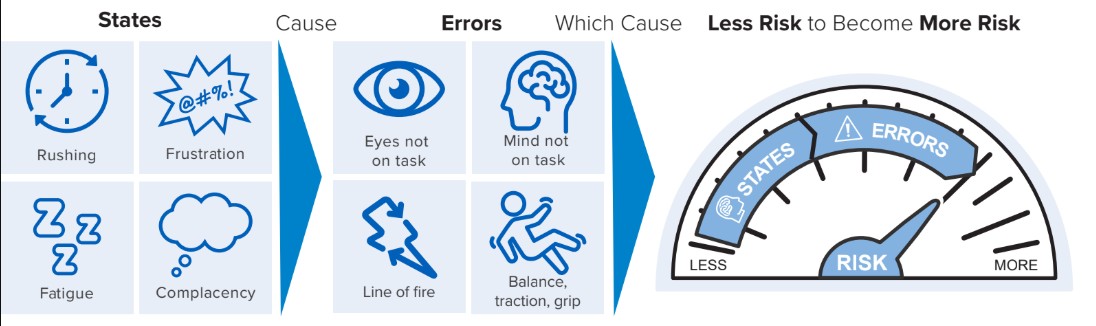
When working at height, these errors can have particularly serious consequences. A momentary distraction, an unexpected movement or a loss of grip may be all it takes for an incident to occur.
Turning awareness into safer habits
Recognizing these states is a good starting point, but awareness alone isn't enough. After all, most experienced workers already know that rushing or losing concentration can be dangerous.
The challenge is recognizing when it's happening to you and responding before an error occurs.
SafeStart addresses this through Critical Error Reduction Techniques (CERTs), which help employees recognize patterns in their own behaviour, learn from close calls and develop safer habits through practice and repetition.
For someone working at height, this could mean noticing when fatigue is affecting their concentration, checking their position before reaching for a tool, or recognizing when frustration is making them rush through a task.
The aim isn't to replace technical working at height training or fall protection measures. It's to complement them by helping employees maintain their awareness and apply what they've learned, even when conditions aren't ideal.
Frequently asked questions about working at height safety
What are the main safety rules for working at height?
Start by assessing whether the task can be completed from the ground. If working at height is unavoidable, use suitable fall prevention measures, inspect equipment, ensure employees are properly trained and have an emergency rescue plan in place.
What PPE is required when working at height?
It depends on the task and risk assessment. Workers may need a safety harness and other personal fall protection equipment, as well as protective headgear, suitable footwear and additional task-specific PPE. Collective protection should generally take priority where practicable.
What are the biggest risks when working at height?
Falls from ladders, scaffolds, roofs and unprotected edges are among the main concerns. Falling objects, unstable surfaces, damaged equipment and changing weather conditions can also create serious hazards. Human factors such as rushing, fatigue and complacency can further increase the risk of critical errors.
Making working at height safety part of everyday habits
Working at height will always require careful planning, suitable equipment and competent workers. But keeping people safe also means considering how they behave when they're tired, under pressure or simply going about a familiar task.
By addressing these human factors, SafeStart helps organizations reinforce their existing safety measures and develop habits that can reduce the likelihood of critical errors, both at work and beyond.
Learn more about SafeStart's human factors-based safety training and how it can complement your organization's fall prevention efforts.
Published on 27.10.2026