
Every day, millions of people carry out their work safely, often while dealing with unexpected challenges, changing conditions and competing priorities. Procedures, training and preventive measures all contribute to these successful outcomes. But they don't explain everything. Employees also make decisions, adapt to situations and respond to problems that cannot always be anticipated.
What allows them to manage these situations successfully? And what can organisations learn from the countless tasks completed without incident?
These questions are at the heart of Safety-II, an approach that encourages organisations to understand what makes everyday work go right, alongside the more familiar practice of identifying and preventing what could go wrong.
What is Safety-II?
Safety-II is an approach to safety management that focuses on understanding how and why work succeeds under different conditions, including when things do not go exactly as planned.
The concept was developed by safety researcher Erik Hollnagel, notably in his 2014 book Safety-I and Safety-II: The Past and Future of Safety Management. It was further explored in the 2015 research paper From Safety-I to Safety-II: A White Paper, co-authored with Robert Wears and Jeffrey Braithwaite.
Traditionally, safety has often been measured by the absence of negative outcomes, such as accidents, injuries or equipment failures. Safety-II takes a broader view by examining what allows people and organisations to achieve successful outcomes in the first place. The idea is straightforward: if we want to improve safety, we need to understand what makes work safe, not only what causes accidents.
Understanding the difference between work-as-imagined and work-as-done
One of the central ideas behind Safety-II is the distinction between work-as-imagined and work-as-done.
Work-as-imagined describes how a task is expected to happen, based on procedures, risk assessments and management expectations.
Work-as-done describes how that task actually happens in real working conditions.
In industrial maintenance, for example, a procedure may assume that the necessary tools are available, equipment is accessible and sufficient time has been allocated. In practice, technicians may encounter unexpected equipment conditions, limited access or changes in production schedules.
They must respond to these differences while completing the job safely.
Some adjustments help prevent problems. Others may introduce risks, particularly when employees are working under pressure or compensating for inadequate resources.
Safety-II encourages organisations to understand this gap between procedures and reality, rather than assuming that work always happens exactly as planned.
Safety-I vs. Safety-II: What's the difference?
Safety-I represents the more traditional approach to safety management. It focuses on identifying hazards, preventing failures and understanding why accidents occur.
Safety-II expands that perspective by studying successful everyday performance.
It's worth noting that Safety-I is not necessarily reactive. Risk assessments, inspections and preventive controls already help organisations identify hazards before accidents happen. What Safety-II adds is a stronger focus on understanding how successful work happens and what allows people to manage changing conditions safely.
Why preventing failures is only part of the picture
Accidents and near misses provide valuable information, but they represent only a fraction of what happens during everyday operations.
In the Safety-I to Safety-II white paper, Erik Hollnagel and his co-authors illustrate this imbalance with a simple example: if one failure occurs in 10,000 events, that also means 9,999 events occur without failure.
The figures are illustrative, rather than an actual workplace accident rate, but they highlight an important point. By examining only the rare occasions when something goes wrong, organisations may overlook valuable information about the much larger number of successful operations.
What helps employees recognise changing conditions? How do teams coordinate their work safely? Which adjustments prevent unexpected problems from becoming incidents?
Safety-II encourages organisations to investigate these successful outcomes, alongside accidents and near misses, to understand what makes safe performance possible.
This does not replace traditional prevention methods. Risk assessments, engineering controls and incident investigations remain essential, while learning from everyday work provides an additional perspective.
Is Safety-II really a new approach?
Some of the ideas behind Safety-II may already sound familiar. Learning from experience, involving employees and improving working conditions have long been part of effective safety management.
What Safety-II brings is a different perspective. Rather than concentrating primarily on identifying risks and preventing failures, it encourages organisations to examine how everyday work succeeds and what makes that success possible.
For HSE managers, the value lies in broadening existing practices rather than replacing them. Risk assessments, inspections and incident investigations remain essential, while learning from successful performance can provide additional insights into how to improve safety.
How Safety-II changes the way we look at human performance
Work rarely happens under perfectly predictable conditions. Equipment, workloads, schedules and the surrounding environment can change throughout the day. Employees respond by making adjustments. They may change the order of a task, communicate with a colleague, slow down or stop work when something unexpected occurs. Safety researchers call these adjustments performance variability.
The key principles behind Safety-II
Safety-II is closely connected to resilience engineering, which studies how organisations maintain successful operations when conditions change. A resilient organisation is not simply one that recovers after an accident. It is one that can recognise changing conditions, respond effectively and learn from experience.
In his book Safety-II in Practice: Developing the Resilience Potentials, Erik Hollnagel identifies four important capabilities:
These capabilities depend on more than individual skills. Employees also need suitable equipment, clear communication, realistic workloads and the authority to act when something is unsafe.
Learning from what goes right
Most organisations have established processes for investigating accidents. Fewer apply the same attention to understanding successful work.
But learning from success doesn't mean analysing every task that goes well. That would be impractical. Instead, HSE teams can focus on situations where employees successfully managed unexpected challenges or changing conditions.
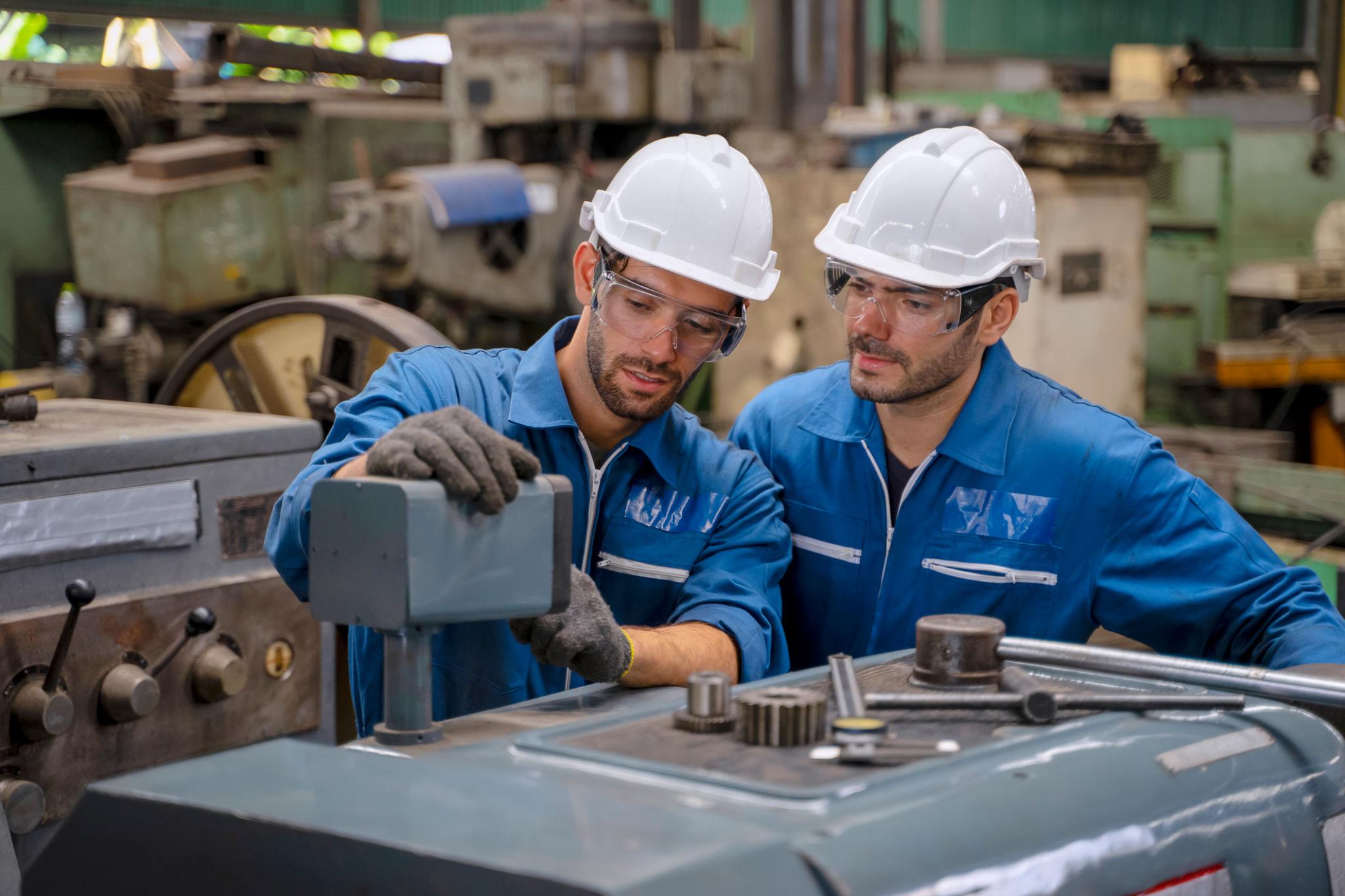
For example, reviewing how a team handled an equipment problem without creating additional risk can reveal useful practices, communication methods or safeguards. The goal is to identify what helped work succeed, understand whether those conditions can be repeated and use that knowledge to improve safety.
How can HSE managers apply Safety-II in practice?
Adopting Safety-II does not necessarily require replacing existing safety programmes. Organisations can begin by expanding how they observe work, investigate incidents and involve employees in safety discussions.
Look beyond failures during investigations and audits
Incident investigations should continue to identify hazards, contributing factors and corrective actions. However, they can also examine what prevented an incident from becoming more serious.
Following a forklift near miss, for example, an investigation might identify poor visibility or inadequate pedestrian segregation. It could also examine how the operator detected the pedestrian and what allowed the vehicle to stop in time. Both findings matter.
The organisation must still address the unsafe conditions, but it can also learn from the actions and safeguards that helped prevent an injury. Workplace audits can take a similar approach by examining how tasks are actually performed, rather than checking compliance alone.
How do Safety-II, HOP and Behaviour-Based Safety relate?
Safety-II shares common ground with Human and Organisational Performance (HOP), an approach that recognises that mistakes are normal and that working conditions strongly influence how people perform. Both encourage organisations to learn from everyday work and understand why things go right, not just why they go wrong.
Behaviour-Based Safety (BBS) has a different focus. It typically uses observations and feedback to encourage safer behaviours.
For example, BBS might identify an employee not using a designated walkway. HOP would explore the conditions influencing that decision, while Safety-II would also examine how people normally navigate the area safely and what makes that possible.
These approaches are not interchangeable, but they can complement each other in improving workplace safety.
Where does SafeStart fit into Safety-II?
Safety-II provides a broad framework for understanding how people and organisations achieve safe outcomes. SafeStart approaches safety from a practical human factors perspective, helping employees recognise situations that increase the likelihood of errors and develop skills to reduce those risks.
Recognising the human factors that influence safety
Developed by Larry Wilson, SafeStart's human factors-based safety training focuses on four common states that can increase the likelihood of unintentional errors:
- Rushing: Working faster than usual, sometimes at the expense of attention or control.
- Frustration: Allowing irritation or stress to interfere with concentration.
- Fatigue: Experiencing reduced alertness or attention due to tiredness.
- Complacency: Becoming less attentive to familiar risks, particularly during routine tasks.
These states can influence how employees perceive hazards, make decisions and respond to changing conditions. SafeStart teaches Critical Error Reduction Techniques (CERTs) to help employees recognise these patterns, learn from close calls and develop habits that reduce their exposure to risk.
For example, a technician who recognises they are rushing may deliberately slow down and refocus before continuing a hazardous task. Over time, practising this response can help make safer decisions more automatic. This connects with an important Safety-II principle: people need the awareness and skills to recognise changing conditions and respond appropriately.
Learning from what works: a shared principle
The connection between SafeStart and Safety-II goes beyond their focus on human factors.
In Unlocking the Code to Human Error, Larry Wilson explains how studying workers who consistently performed well in high-risk environments helped shape the SafeStart methodology.
This reflects a central principle of Safety-II: understanding why people succeed can be just as valuable as investigating why they fail.
While the two approaches developed independently, both recognise the importance of learning from everyday performance. SafeStart puts this learning into practice through training that helps employees recognise risks and develop safer habits, alongside the procedures and safeguards that protect them.
Moving towards a more complete understanding of safety
Safety-I and Safety-II offer two complementary perspectives. One helps organisations understand and prevent failures, while the other reveals what makes everyday work successful.
For HSE professionals, the opportunity is to learn from both. Investigating incidents remains essential, but so does listening to employees, understanding how work actually happens and identifying what helps people stay safe.
Better safety comes from understanding both what goes wrong and what makes things go right.
Want to strengthen human factors awareness in your organisation? Discover how SafeStart helps employees recognise everyday risks and develop practical skills to reduce critical errors.
.jpg)
Published on 13.10.2026
.jpg)

.jpg)