
Energy is part of almost every workplace task. When that energy is high, uncontrolled or released unexpectedly, it can increase both the likelihood of an incident and the severity of the outcome. It may also leave workers with very little time to react.
Hazardous energy is often associated with machinery, although the risk is much wider. Pressure, heat, electricity, movement and stored energy can all harm someone during normal operations or when equipment is being cleaned, adjusted or repaired.
Controlling the energy is essential, but the system also relies on people identifying every source and applying the right controls. Under time pressure or changing conditions, human factors can affect how reliably those steps are followed.
What is hazardous energy?
Hazardous energy is energy that can injure someone if it is transmitted, released or reintroduced unexpectedly. It may be actively powering equipment or remain stored within a system after shutdown.
A stop button ends normal operation, but it does not usually separate equipment from every energy source. Before work begins, teams need to know where the energy comes from, how it could reach someone and what will keep it under control.
Why “hazardous” is the key word
Energy itself is necessary for work. It becomes hazardous when the level, condition or route of exposure creates the potential for harm.
The amount of energy influences the possible consequence, while the way it is controlled affects the chance of exposure. This is why energy should be considered during both task planning and risk assessment, especially when workers may enter a danger zone.
The main types of hazardous energy
Several energy types may be present in one system. Identifying each one gives the team a clearer basis for selecting the right isolation and verification method.
Stored hazardous energy: a commonly overlooked risk
Stored energy can remain after the main supply has been isolated. Equipment may look inactive while pressure, electrical charge, tension or gravitational force is still present.
The control must match the source. Stored energy may need to be discharged, released, restrained or physically blocked, and the safe state must remain stable until the work is complete.
Chemical hazardous energy in industrial settings
Chemical energy requires attention to both the process and the substance involved. Isolating a pump, for example, does not remove material already held inside connected pipework or vessels.
The isolation plan should account for pressure, temperature, reactivity and possible exposure. Draining, venting or decontamination may be required before intrusive work can begin.
When are workers most likely to be exposed to hazardous energy?
Exposure becomes more likely when people work closer to the energy source or enter areas that are normally protected. This often happens during maintenance, cleaning, fault-finding, adjustment and blockage removal.
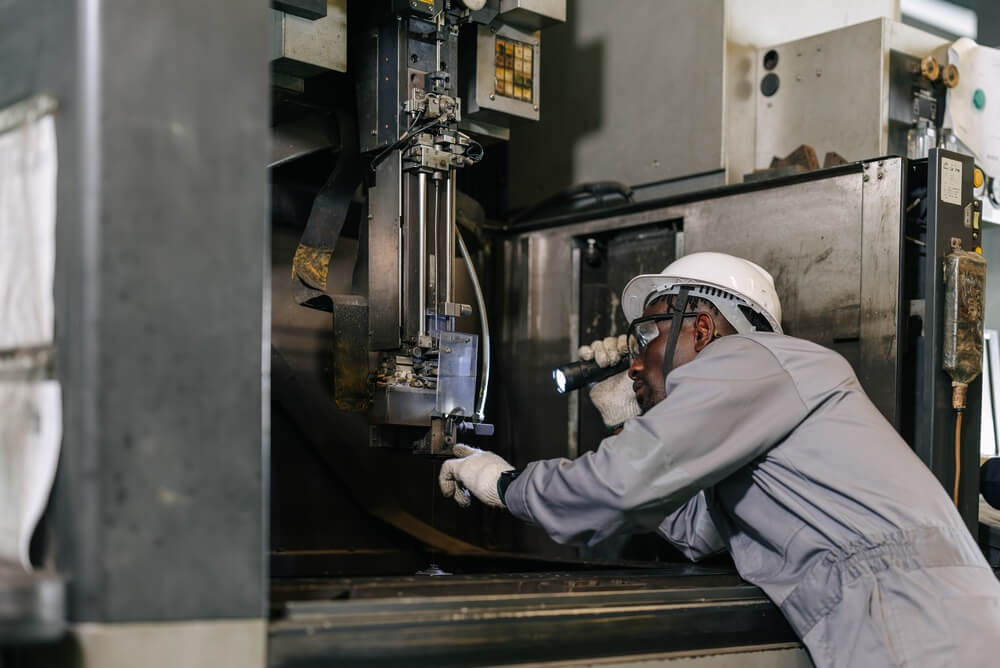
These tasks may also take place while production is interrupted. As the pressure to restart increases, people can narrow their attention to the immediate problem and overlook a secondary source or a change in the job.
Repeated interventions create another risk because a task that was once unusual can begin to feel routine. Familiarity improves efficiency, but over time it can also reduce the worker's sense of danger.
Hazardous energy control: lockout tagout and beyond
Hazardous energy control is the full process used to prevent energy from reaching a person. Lockout tagout, or LOTO, is one important part of that process, but safe isolation also depends on planning, stored-energy control, verification and a managed return to service.
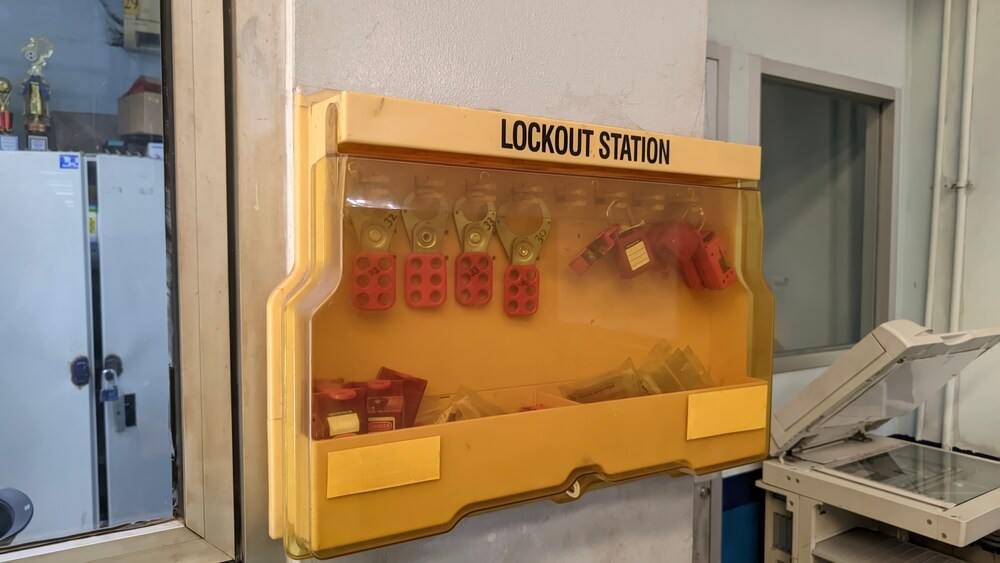
The method should reflect the equipment and the work. A standard approach helps teams remain consistent, while equipment-specific procedures address the actual isolation points and energy sources involved.
Hazardous energy control programme steps
A hazardous energy control programme should cover the full job:
- Identify the task, the equipment and every relevant source of energy.
- Shut down the equipment using the normal stopping procedure.
- Isolate each energy source and secure the isolation points.
- Release or restrain stored energy and prevent it from building up again.
- Verify the safe state before anyone enters the danger zone.
- Maintain control through changes in personnel, shifts or work scope.
- Check the area, restore safeguards and manage the return to service.
Each step supports the next. If the initial energy assessment is incomplete, the lockout and verification process may also be incomplete.
Lockout tagout vs. other isolation methods
LOTO uses locks to secure energy-isolating devices and tags to communicate who applied the control and why it must remain in place. It provides personal control and helps prevent unexpected restart while work is underway.
A stop button, emergency stop or software command serves a different function because it does not normally provide secure energy isolation. Other engineered methods may be suitable for specific tasks, but they should be selected through risk assessment and provide effective protection against re-energisation or release.
Why procedures alone do not prevent hazardous energy incidents
Clear procedures are essential, but people carry them out in real operational conditions. A worker may know the isolation process and still miss a step if attention is affected by pressure, frustration, fatigue or familiarity.
This does not remove the organisation's responsibility. Recurring faults, difficult isolation points, weak planning and unrealistic time pressure need to be corrected because they influence how work is performed.
Human factors provide another layer of prevention. They help explain why a known procedure may not be applied as intended and what can be done before the error leads to exposure.
The four states that increase human error risk
SafeStart focuses on four states: rushing, frustration, fatigue and complacency. These states can increase the likelihood of eyes not on task, mind not on task, moving into or being in the line of fire, and losing balance, traction or grip.
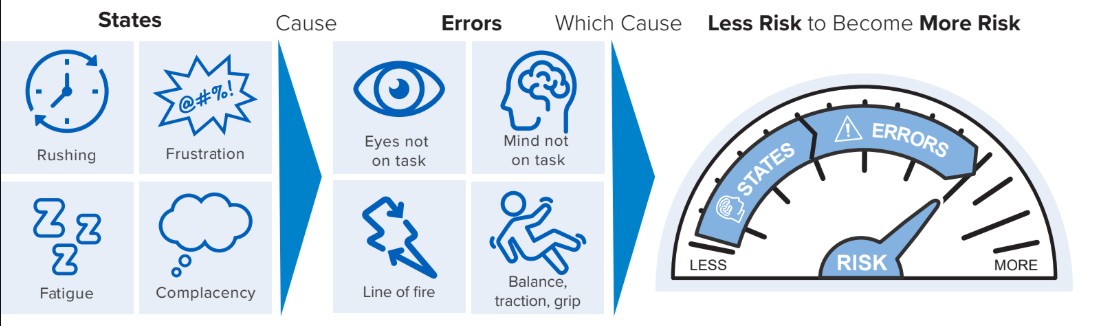
Around hazardous energy, the connection can be immediate. Rushing may shorten verification, fatigue may weaken a handover and frustration may keep attention fixed on the fault. Complacency can weaken the checks that normally keep the task under control.
One of the SafeStart Critical Error Reduction Techniques is to self-trigger on your state or on the amount of hazardous energy involved. If a worker notices they are rushing, frustrated or tired, that state becomes a prompt to pause and refocus. A high level of energy can provide the same trigger, even when the worker feels calm and in control.
This matters because serious exposure can develop quickly once energy is released. Using the energy level as an early warning gives the worker an opportunity to check the isolation, reconsider the line of fire and correct their position before an error occurs.
How habits and automatic behaviour affect energy isolation
Many workplace actions become automatic through repetition. This helps people work efficiently, although it can create risk when the usual response no longer fits the current situation.
Strong habits can also support safety. Checking the isolation, reviewing the line of fire and communicating changes can become established parts of the task. These habits are particularly useful when complacency makes the risk harder to notice.
Building a culture where energy control is second nature
A strong energy-control culture is built through consistent practice. Procedures, equipment design, supervision and training should give workers the same clear message about when isolation is required and how control is maintained.
Close calls can show where the system is becoming unreliable. Reviewing the conditions, the worker's state and the controls around the task provides more useful information than treating the event as a simple failure to follow rules.
Leaders also need to respond when production pressure conflicts with safe isolation. Workers are more likely to stop and reassess a task when experience shows that the organisation will support that decision.
How human factors training complements your existing LOTO programme
Effective hazardous energy control starts with identifying every source, isolating it and verifying that the safe state will hold throughout the work. LOTO provides the technical process, while human factors training supports the way people apply that process in day-to-day operations.
SafeStart helps turn key precautions into habits that remain reliable during familiar tasks and changing conditions. It also gives teams a shared way to discuss close calls and small errors, so they can understand what affected the work and strengthen the controls around it.
Human factors training does not replace engineering controls, procedures or supervision. It supports their consistent use and helps energy control become part of how work is planned, carried out and reviewed.
If your organisation already has a LOTO programme, SafeStart can help strengthen the skills needed to apply it consistently.
.jpg)
Published on 21.09.2026

%20(1).jpg)
%20(1).jpg)