
%20(2).png)

















Why safety in food and beverage requires a specific approach
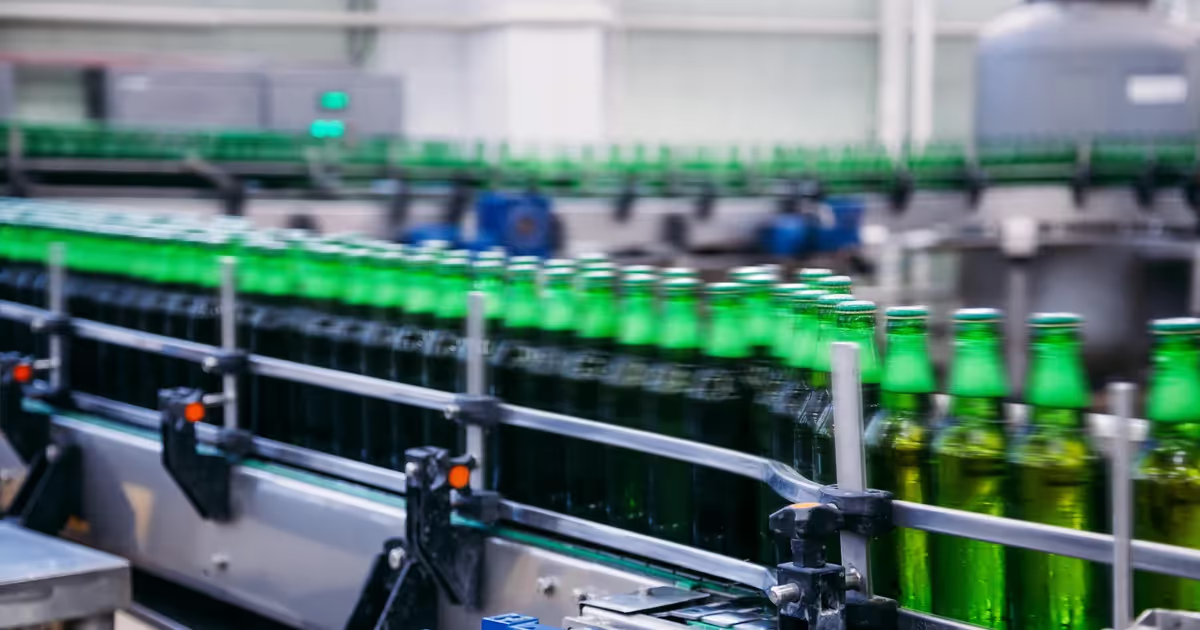
Food and beverage facilities operate under conditions that make workplace safety particularly challenging. Production lines run at high speeds, cleaning takes place frequently, and employees often work rotating shifts to maintain output.
According to the UK's Health and Safety Executive (HSE), around one-third of reportable injuries in food and drink manufacturing involve manual handling and lifting. Machinery, workplace transport, slips and falls are also significant sources of serious injury.
The consequences extend beyond the person injured. An incident can interrupt production, require equipment repairs, increase absenteeism and create additional pressure on teams already working to demanding schedules.
The most common hazards in food and beverage manufacturing
Slips, machinery and workplace transport
Machinery-related injuries do not occur only during unusual breakdowns or major maintenance work. Historical HSE analysis found that 90% of conveyor injuries occurred during normal, foreseeable operations, including routine interactions, clearing blockages, cleaning and production activities.
This is particularly relevant in food and beverage manufacturing, where employees work with the same equipment repeatedly. Familiarity can reduce the perception of risk, especially when workers are under time pressure or responding to interruptions.
Effective guarding and safe isolation procedures remain essential. Employees also need to recognise how routine work and changing conditions can influence their attention and decisions.
Chemical and biological exposure
Cleaning and disinfection are essential to food safety, but they introduce occupational health risks of their own. Workers may be exposed to corrosive cleaning products, sanitising chemicals, flour dust, biological materials or airborne substances.
Employers must assess and control these exposures. In Great Britain, the Control of Substances Hazardous to Health Regulations (COSHH) set requirements for managing harmful substances. Equivalent national rules apply across other markets.
Repetitive work and manual handling
Manual handling remains one of the leading causes of workplace injuries in food manufacturing. In France, 28.8% of recorded accidents in the food and beverage manufacturing sector in 2023 involved manual handling, according to Assurance Maladie data presented in the SafeStart infographic.
Lifting ingredients, moving containers, handling finished products and repetitive packing tasks all place physical demands on workers.
These risks increase when tasks involve awkward postures, repetitive movements or insufficient recovery time. Ergonomic improvements, mechanical handling aids and better task organisation can help reduce exposure.
How human factors influence workplace injuries
Even where equipment and procedures are well designed, people must still make decisions and respond to changing conditions throughout the working day.
SafeStart, developed by Larry Wilson, focuses on four critical states that can increase the likelihood of errors:
- Rushing: Trying to complete a task quickly can lead to missed hazards or shortcuts.
- Frustration: Equipment problems, repeated stoppages or delays can affect attention and judgement.
- Fatigue: Long shifts and demanding physical work can reduce concentration and reaction time.
- Complacency: Familiar tasks can become so routine that workers stop actively recognising certain risks.
These states can contribute to critical errors, such as eyes not on task, mind not on task, moving into the line of fire or losing balance, traction or grip.
Why production pressure and fatigue matter
Food and beverage production frequently relies on shift work to maintain output, meet delivery schedules and manage seasonal demand.
Working outside normal daytime hours can disrupt sleep and recovery, particularly when employees rotate between shifts. Fatigue can affect alertness, reaction time and decision-making, making familiar tasks harder to perform safely.
Research on sleep deprivation has shown that remaining awake for approximately 17 hours can impair performance to a level comparable with a blood alcohol concentration of 0.05%.
In a food processing facility, the combination of fatigue, production pressure and moving machinery deserves particular attention. Employers should consider shift design, adequate recovery time, workload and staffing alongside training that helps employees recognise fatigue-related risks.
Understanding the conditions behind an incident
An injury, equipment failure or production interruption is often the visible outcome of several contributing factors.
Behind the event, there may have been repeated interruptions, staffing shortages, time pressure, fatigue or a gradual acceptance of unsafe practices.
These conditions can influence how employees recognise hazards and make decisions. For example, an operator clearing a blockage may be responding to pressure to restart production, while a maintenance technician may be working after several hours of physically demanding tasks.
Understanding these conditions helps organisations move beyond identifying what went wrong to examining why the situation developed.
This is where human factors training can complement existing safety systems, by helping employees recognise the states and behaviours that increase their exposure to risk.
Building a stronger safety programme
Food and beverage manufacturers must comply with applicable occupational health and safety requirements, including machinery safety, hazardous substance controls, risk assessments and worker training.
Food safety standards, such as HACCP-based systems, address contamination and product safety. They complement, but do not replace, occupational health and safety measures designed to protect employees.
A strong safety programme combines these requirements with practical prevention:
- Maintain effective machinery guarding, isolation and maintenance procedures.
- Design workstations and production schedules to reduce unnecessary physical strain.
- Involve frontline employees in identifying hazards and improving work practices.
- Reinforce safe habits through regular, practical learning.
- Review incidents and near misses to understand both individual actions and the working conditions that influenced them.
Helping food and beverage teams build safer habits
SafeStart helps organisations address the human factors that influence everyday safety decisions. Rather than replacing existing procedures, technical safeguards or compliance systems, the programme strengthens employees' ability to recognise risk and respond before an error leads to an injury.
Through practical training and ongoing reinforcement, employees learn to recognise the four critical states, identify patterns in their own behaviour and apply Critical Error Reduction Techniques in daily activities.
These skills are particularly valuable in food and beverage environments, where routine tasks, frequent interruptions and changing production demands can affect attention.
With millions of people trained worldwide, SafeStart supports organisations seeking a consistent approach to human factors across different teams, facilities and countries.
Explore the hidden risks in food and beverage manufacturing
How do production pressure, routine work and human factors interact to create risk?
Our Food & Beverage Safety infographic explores industry hazards, accident patterns and the conditions that can increase exposure, even in highly controlled production environments.
Explore the infographic.jpeg)
Strengthen safety across your operations
Discover how SafeStart can complement your existing safety systems and help your teams develop safer habits at work, at home and on the road.