
What Is Behavioural Safety Training?
Behavioural safety training builds on the principles of behavioural safety and BBS. It focuses on helping people apply safe behaviours consistently, even under pressure.
Where traditional approaches define and observe behaviours, training goes further. It helps individuals understand what drives their actions in real time.
In practice, this means addressing things like:
- Loss of focus during routine tasks
- Rushing to meet deadlines
- Frustration when things go wrong
- Fatigue during long shifts
These are not rare situations. They are part of everyday work.
SafeStart focuses on these human factors because they are directly linked to unintentional errors. In fact, most incidents are not caused by a lack of rules or knowledge, but by predictable human patterns.
This is what makes behavioural safety training essential. It helps people manage risk in the moment, not just follow procedures.
Why Traditional Safety Training Often Falls Short
Most safety training is designed around compliance. It ensures people understand procedures, hazards, and controls. This is of course necessary, but it is not enough.
The reality is that people rarely get hurt because they did not know the rule. They get hurt because something influenced their behaviour at the wrong time.
For example:
- A worker skips a step because they are rushing
- A routine task leads to complacency
- Distraction causes a lapse in attention
These are not failures of knowledge. They are human errors.
Traditional training does not address this well. It often assumes that if people know the right thing to do, they will do it.
SafeStart challenges that assumption. It focuses on the conditions that lead to errors and provides simple techniques to prevent them before they happen.
Real-World Examples of Behavioural Safety in Action
To understand the value of behavioural safety training, it helps to look at everyday situations.
Imagine a maintenance technician performing a familiar task. They have done it hundreds of times without issue. Over time, the task becomes automatic.
Now introduce a small change. The technician is under time pressure, but more importantly, something outside of work is on their mind. Maybe they had an argument at home that morning, or they are worried about a personal issue they have not resolved.
Physically, they are at work. Mentally, part of their attention is somewhere else.
This is what SafeStart defines as “mind not on task.”
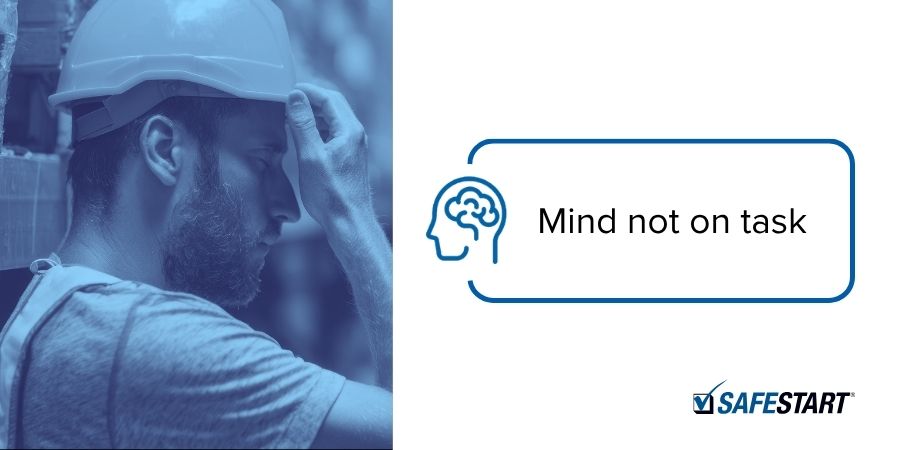
Their eyes may still be on the job, but their thinking is split. That reduces their ability to anticipate risk, notice small changes, or react quickly if something unexpected happens. In that moment, the likelihood of error increases.
This is a common situation across all industries. People do not leave their thoughts and concerns at the door when they come to work.
In another real example, a worker recognised that their focus consistently dropped at a certain time of day. Instead of relying on memory or discipline alone, they introduced a simple control by involving a colleague during higher-risk tasks.
What makes this different from traditional behavioural safety is the focus on anticipation.
Rather than waiting for an unsafe act to be observed, the individual identified a predictable moment of reduced focus and acted before an error occurred. This is the shift from observing behaviour to managing human error.
Who Is Behavioural Safety Training For?
Behavioural safety training is not limited to frontline teams. It is designed to work across the entire organisation, because risk is influenced at every level.
Employees
For frontline workers, the focus is practical. Training helps them recognise when their state is increasing risk, stay focused on the task, and avoid common human errors in real time.
Supervisors
Supervisors play a key role in reinforcing behaviours. Training helps them go beyond observation and feedback, and instead support their teams in anticipating and managing risk before errors occur.
Managers
For managers, behavioural safety training provides a better understanding of how workload, pressure, and system design influence behaviour. It helps them make decisions that reduce the likelihood of human error.
Senior leaders
At leadership level, the focus is culture and performance. Behavioural safety becomes a way to improve not just safety outcomes, but also engagement, productivity, and consistency across the organisation.
This is what makes behavioural safety training scalable. It is not a programme for one group. It is a capability that supports the entire business.
The Business Benefits of Behavioural Safety Training
Behavioural safety training is often seen as a safety initiative. In reality, it delivers much broader business value. When organisations address human error effectively, they typically see:
- Fewer incidents and injuries
By helping people recognise and manage risk in real time, many incidents can be prevented before they happen. - Improved employee engagement
When people understand why errors occur and feel equipped to manage them, they are more involved and proactive in safety. - Reduced costs
Fewer incidents mean lower direct costs like medical expenses and insurance, as well as indirect costs such as downtime and lost productivity. - Better operational performance
The same factors that cause safety incidents also affect quality and efficiency. Improving focus and reducing errors leads to more consistent performance.
SafeStart programmes have consistently shown significant reductions in injury rates, often within a relatively short time frame.
More importantly, the impact is sustainable. By building habits and improving how people think and react, behavioural safety training supports long-term performance, not just short-term results.
What Types of Safety Training Should Organisations Combine?
If you want to reduce incidents in a meaningful and sustainable way, relying on a single approach is not enough. The most effective organisations combine three types of safety training, each addressing a different aspect of risk.

1. Rules and Regulations
This covers procedures, equipment use (PPE), and hazard controls. It ensures people know how to perform their tasks safely and understand the risks involved. Without this foundation, safe behaviour cannot be applied consistently.
2. Behavioural safety training
This focuses on observable actions and day-to-day decisions. It helps teams recognise unsafe behaviours, give feedback, and reinforce safer choices. It is a key part of building awareness and accountability across the workforce.
3. Cognitive and human factors safety training
This is where many organisations still have a gap.
This type of human factors safety training focuses on what happens in the moment. Not just what people know. Not just what is observed. But how they think, react, and make decisions under pressure.
It addresses situations like:
Because in the end, incidents do not happen during training sessions or audits. They happen in split seconds, when attention drops or reactions are delayed.
- Recognising when your mind is not on the task
- Catching yourself when you start rushing
- Resetting focus after a distraction
- Anticipating errors before they happen
SafeStart sits strongly in this category. It develops practical mental skills and safety reflexes that help people stay in control, even when conditions are not ideal.
The Behaviour-Based Safety (BBS) Process Explained
Most behavioural safety programmes follow a similar structure.
The 7 steps in the behaviour-based safety process typically include:
- Identifying critical behaviours linked to risk
- Defining safe vs unsafe actions
- Creating observation checklists
- Carrying out observations
- Providing feedback
- Reviewing data and trends
- Improving systems and behaviours over time
These steps are effective for reinforcing behaviour.
However, they rely on observation and feedback after or during the action. They do not fully address what happens before an error occurs.
This is where behavioural safety training from SafeStart adds a different layer. It focuses on anticipation and real-time decision making.
Behavioural Safety Training Online vs In-Person
Organisations today have more flexibility than ever in how they deliver behavioural safety training. Both in-person and digital formats have clear advantages, and the best results often come from combining them.
In-person training
Classroom-based sessions are powerful for engagement. They allow people to share experiences, discuss real scenarios, and build a common understanding of safety concepts. This is especially valuable when introducing new ideas or starting a programme.
Behavioural safety training online
Digital learning offers scalability and flexibility. It allows organisations to deliver behavioural safety training online across multiple sites, reinforce key concepts over time, and reach employees when it suits their schedules.

However, the real advantage of online training is not just access. It is consistency. Regular, short interactions help keep safety top of mind and support habit formation.
This is where modern behavioural safety training courses are evolving.
Rather than one-off sessions, SafeStart combines in-person training with ongoing digital reinforcement. Through tools like YOUFactors, employees receive short learning modules and nudges that help them apply concepts in real situations and build lasting habits.
For organisations looking to scale this approach, SafeStart offers a structured digital journey that complements classroom learning:
Get Started with Behavioural Safety Training
If your organisation already uses behavioural safety or BBS, the real opportunity is not to replace it. It is to make it more effective.
That means addressing what happens in the moment, when attention drops, pressure builds, or habits take over.
SafeStart helps you close that gap.
It gives your teams practical skills to recognise risk in real time, reduce human error, and build habits that support safety every day, not just during observations.
Whether you are looking to strengthen an existing behavioural safety programme or move beyond traditional training, SafeStart provides a proven, structured approach that delivers lasting results.
👉 Schedule a SafeStart consultation
👉 Discover how the methodology works in practice