
Europe is currently experiencing a significant heatwave, with temperatures forecast to reach as high as 43°C in some regions. Authorities across several countries have responded by closing schools, restricting rail services, and issuing warnings for older adults and other vulnerable groups. While much of the public attention focuses on the disruption to daily life, these extreme conditions also create serious challenges for workplaces where employees are exposed to heat for prolonged periods.
For workers in construction, manufacturing, logistics, utilities, agriculture, and other physically demanding industries, high temperatures are more than an inconvenience. They increase the risk of heat-related illness while also affecting concentration, decision-making, and physical performance. Under those conditions, even routine tasks can become more difficult to perform safely, especially when workers are already managing production demands, long shifts, or physically demanding work.
Heat Stress Is More Than a Health Issue
Heat stress is one of the most common workplace hazards during periods of extreme weather, yet it is often underestimated until someone becomes seriously ill. Many organisations focus on hydration, ventilation, and rest breaks, which are all essential controls. However, heat also affects the way people think and respond to risk. As body temperature rises, attention can drift, reaction times may slow, and critical warning signs are more likely to be missed.
This is where heat stress becomes more than a health issue. It becomes a safety issue. When workers become overheated, they are not only more vulnerable to dehydration and heat-related illness, but also to the human factors that contribute to incidents and injuries. Fatigue develops more quickly, frustration can increase, and maintaining focus becomes more difficult. As a result, the likelihood of making a critical error rises, even when the task itself is familiar and the hazards are well understood.
Understanding heat stress symptoms, prevention strategies, and the role human factors play in workplace incidents can help organisations better protect their workforce during periods of extreme heat.
What Is Heat Stress?
Heat stress occurs when the body's natural cooling system can no longer effectively manage internal temperature. Normally, the body regulates heat through sweating and increased blood flow to the skin. However, when temperatures are high, humidity is elevated, physical exertion is intense, or workers wear heavy protective clothing, the body can struggle to release heat quickly enough.
As heat builds up, workers may experience a range of physical and mental symptoms that can progress from mild discomfort to serious medical emergencies. While heat stress is often discussed as a health issue, it is equally important to recognise its impact on workplace safety. The same conditions that increase the risk of heat exhaustion can also affect awareness, judgement, and decision-making, which means the potential for errors and incidents increases alongside the physical risk.
What Are the Symptoms of Heat Stress?
Recognising heat stress symptoms early is critical because the condition can escalate quickly, particularly during periods of sustained high temperatures.

Early symptoms often include excessive sweating, thirst, headache, fatigue, dizziness, muscle cramps, and difficulty concentrating. Workers may also become unusually irritable or find it harder to stay focused on routine tasks.
As heat stress progresses, symptoms can become more severe. Nausea, vomiting, weakness, rapid heartbeat, confusion, poor coordination, and fainting may develop. In the most serious cases, heatstroke can occur, creating a life-threatening emergency that requires immediate medical attention.
One of the challenges is that many workers dismiss the early signs as simply being tired or uncomfortable. In practice, this delay in recognising the problem often allows the condition to worsen, which is why awareness and early intervention are so important.
Why Heat Stress Increases the Risk of Errors and Injuries
Most people understand that extreme heat can make them feel tired. What is less widely recognised is how heat affects the mental processes that help keep people safe.
As workers become hotter and more fatigued, concentration becomes harder to maintain. They may overlook hazards they would normally notice, forget routine checks, or become less aware of changing conditions around them. Under those circumstances, a task that is normally straightforward can suddenly carry much greater risk.
Research involving petrochemical workers found that heat exposure was associated with slower reaction times and reduced attention by the end of a shift, providing evidence that heat can affect cognitive performance as well as physical wellbeing. The researchers concluded that as heat stress increased, workers became more vulnerable to performance declines that could contribute to errors and safety risks.
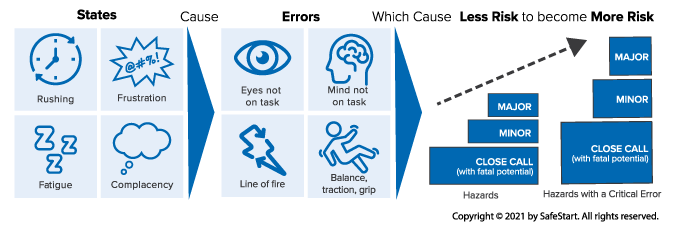
This aligns closely with what SafeStart has observed for decades. Many incidents occur when people are affected by states such as fatigue, frustration, rushing, or complacency. Heat exposure can intensify each of these states.
A worker who is already physically tired may become fatigued much earlier than usual. Someone who is uncomfortable because of the heat may become frustrated more quickly. Production pressures do not disappear simply because temperatures rise, which means workers can still feel tempted to rush. At the same time, familiarity with a task can create complacency, causing people to underestimate how much the heat is affecting them.
Heat Affects More Than Physical Performance
Heat can also affect mood and emotional wellbeing. Researchers have found that prolonged exposure to extreme heat can increase irritability, emotional stress, and difficulty concentrating. A worker who is already uncomfortable, distracted, or frustrated may be more likely to react impulsively, overlook hazards, or make decisions they would not normally make under cooler conditions.
This is particularly relevant because frustration is one of the critical states associated with human error. As temperatures rise, so does the potential for minor irritations, communication breakdowns, and lapses in judgement that can contribute to incidents and injuries.
What Are the 5 Stages of Heat Stress?
Heat-related illnesses rarely appear without warning. In most cases, the body provides several signs that it is struggling to cope with hot conditions. Understanding the progression of heat stress can help workers and supervisors recognise problems earlier and intervene before a medical emergency develops.
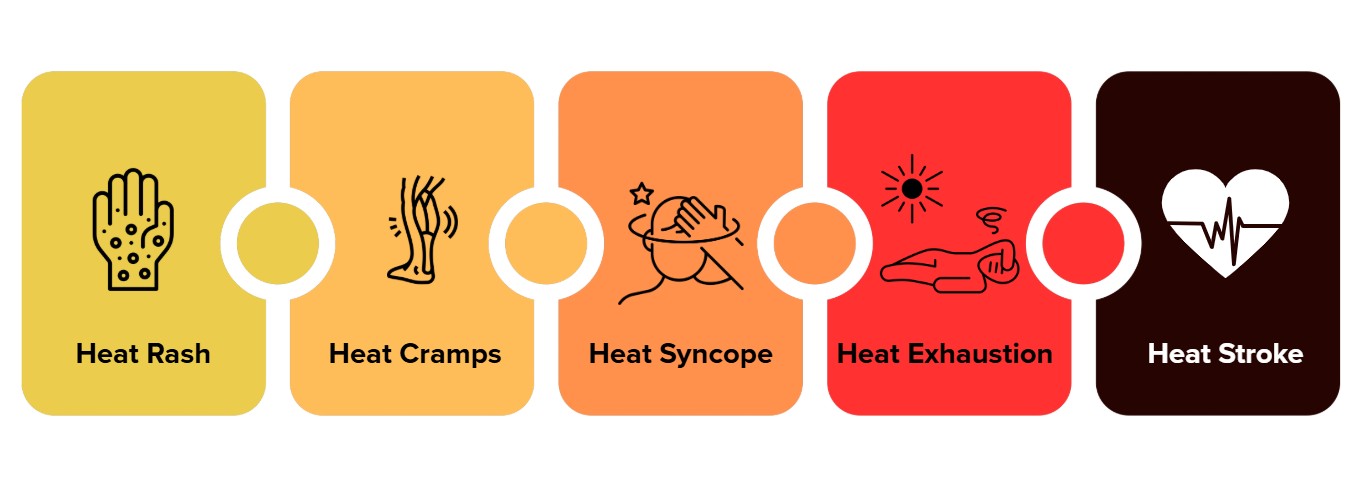
1. Heat Rash
Heat rash occurs when sweat becomes trapped in the skin, causing irritation, redness, and discomfort. Although usually minor, it can be an early sign that environmental conditions are becoming difficult for the body to manage.
2. Heat Cramps
Heat cramps are painful muscle spasms that often develop after prolonged sweating. They are usually linked to the loss of fluids and electrolytes and commonly affect the legs, arms, and abdomen.
3. Heat Syncope
Heat syncope refers to dizziness or fainting caused by reduced blood flow to the brain. It often occurs after standing for long periods or rising suddenly while working in hot conditions.
4. Heat Exhaustion
Heat exhaustion is a more serious condition and should never be ignored. Symptoms include heavy sweating, weakness, headache, nausea, dizziness, and difficulty concentrating. Without prompt action, it can progress to heatstroke.
5. Heatstroke
Heatstroke is a life-threatening medical emergency. The body's temperature regulation system begins to fail, causing a rapid rise in core body temperature. Symptoms may include confusion, loss of consciousness, seizures, and hot skin. Immediate medical treatment is required.
A Simple 5-Minute Heat Stress Toolbox Talk
During periods of extreme heat, short daily conversations can help keep heat stress prevention front of mind and encourage workers to speak up before symptoms become serious.
A simple heat stress toolbox talk could follow this structure:
Minute 1: Current conditions and today's heat-related risks.
Minute 2: Early symptoms workers should watch for in themselves and others.
Minute 3: Hydration, rest breaks, cooling measures, and work planning.
Minute 4: How fatigue, frustration, rushing, and complacency can increase risk during hot weather.
Minute 5: Team discussion question:
"What signs tell you that the heat is starting to affect your ability to work safely?"
The goal is not to deliver a lengthy presentation. It is to create awareness, encourage peer observation, and make it easier for workers to raise concerns before heat stress affects their health or performance.
How SafeStart Supports Heat Stress Prevention
Heat stress prevention begins with environmental controls such as hydration, cooling measures, rest breaks, and risk assessments. These controls are essential and should always form the foundation of any heat management strategy.
SafeStart complements those efforts by helping workers develop greater awareness of the human factors that contribute to incidents and injuries. By helping people recognise these states earlier and understand how they influence behaviour, SafeStart supports safer decision-making in real-world conditions. The result is not a replacement for existing controls but an additional layer of protection that helps workers apply safety awareness more consistently throughout the day.
Published on 22.06.2026
.jpg)
%20(1).jpg)