
Anyone on social media knows them, people who post selfies on a regular basis. While most users may be either amused or annoyed by these digital self-portraits, this trend is a signpost of something larger: it is a matter of the psychological state we are in. However, taking selfies is an underrated example of complacency. The dramatic truth about is that it really can have severe consequences. In fact, “death by selfie” may sound much more absurd than it actually is as the infographic below shows.
Never underestimate the psyche
One the one hand, taking selfies can have a huge, positive impact on our self-esteem: when we are the image motif, we feel special and amazing. Of course, this effect has decreased – taking pictures takes less time and money than it used to, and in this case, we push the button ourselves. However, the basic principle remains the same when we create snapshots in time and can look at them again later. Plus, we can share it to a larger audience than we used to.
Taking selfies: prime example of complacency
Whatever the reasons may be for those taking selfies, they are most likely to consider it a harmless trend. However, having a closer look at the statistics, the numbers reveal that this habit may not be so harmless after all. Yet we wonder how such fatalities can happen, for instance a railway employee being hit by a train while taking selfies. As the infographic below shows, this has happened eight times between 2014 and 2016. Number one cause of reported selfie-related deaths in those two years was falling from heights.
Complacency is a silent killer
“Death by selfie” takes complacency to an extreme: capturing unique moments as well as posing in a more mundane setting can be fatal after all. These situations happen to us rather often – more often than we would expect them to. Learning about such tragic instances hopefully are a lesson to us. They give us a broad hint to look closer – in routines as well as in crucial moments.
Infographic: The most frequent causes of selfie-fatalities
Taking selfies while posing has a significant – and underrated hazard potential as this Statista infographic shows.
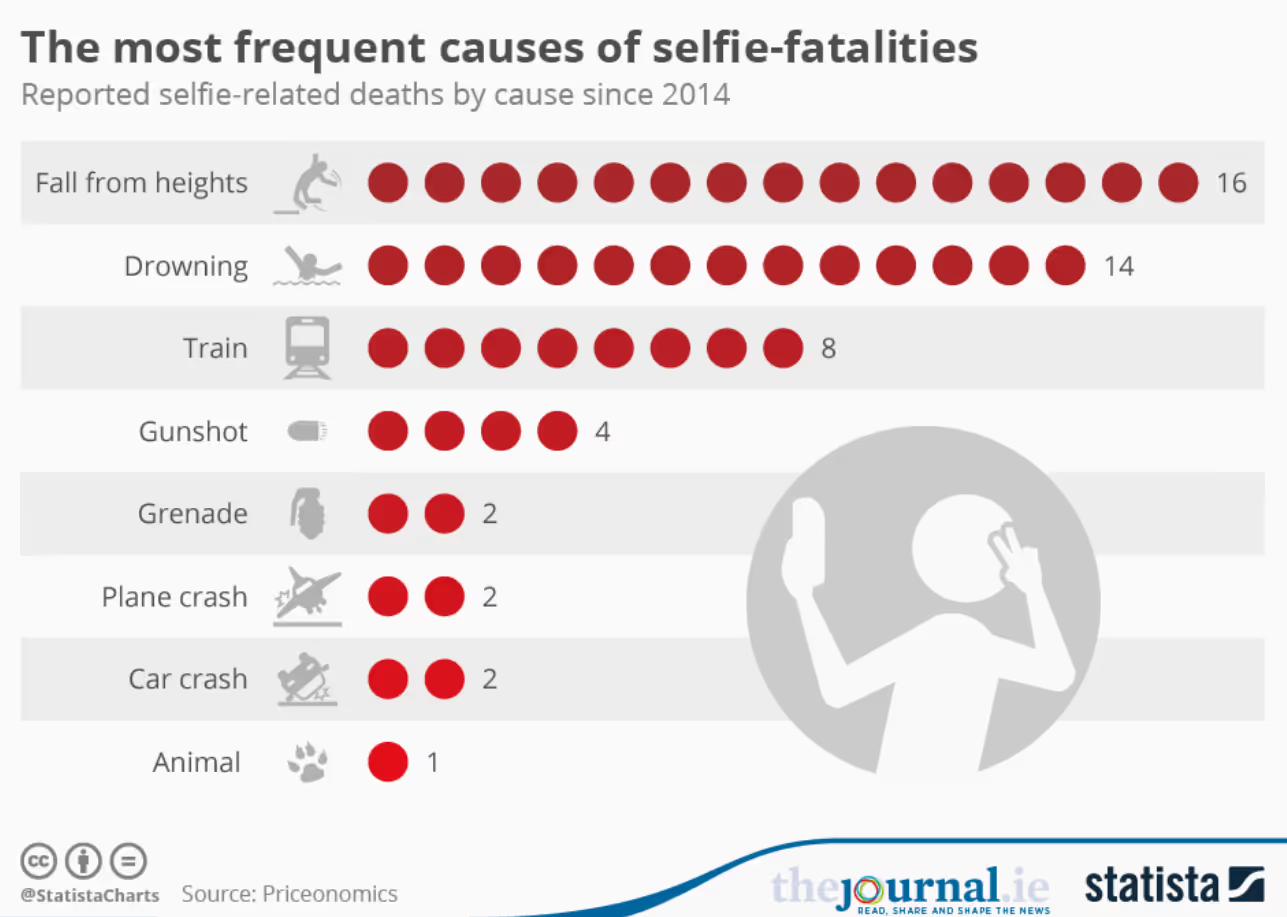
The infographic illustrates the most frequent causes of reported selfie-related fatalities between 2014 and 2016. (Source: ©[/caption]
.avif)
Published on 14.06.2020

.jpg)