
Which Jobs Are Really the Most Dangerous?
If you immediately thought of demolition, high-rise window cleaning, or offshore work, this post might surprise you.
From a risk assessment point of view, the most dangerous activities are not always the ones that look the most hazardous.
So here's a question worth asking: Is your personal risk perception aligned with actual risk potential?
Are You Assessing Risk Realistically?
Let’s run a quick exercise. Answer these three questions in order:
- What’s the most dangerous activity you’ve ever done?
- What’s the worst injury you’ve ever had?
- Did you suffer that injury while doing the most dangerous thing?
For most people, the answer to number 3 is a clear "No."
Even someone who’s skydived might end up with their worst injury from slipping in the bathroom. That’s because obvious hazards and deliberate risk-taking don’t usually cause the majority of serious injuries.
Obvious Hazards: The “Dangerous” Jobs
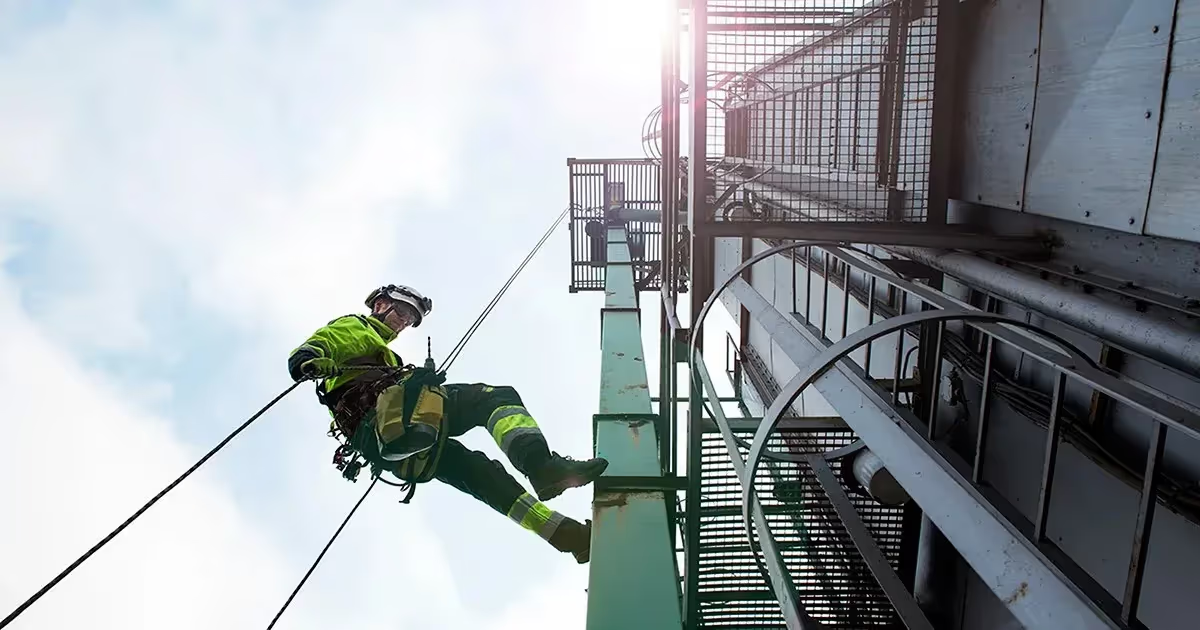
According to insurance data, jobs like scaffolding, roofing, race car driving, or deep-sea fishing are often listed among the most dangerous. Why? Because in those roles, you’re almost always in the line of fire.
These workers are exposed to serious hazards like heights or extreme conditions. While the total number of accidents may not be higher than other fields, when something does go wrong, the outcome is often severe or even fatal.
And that’s why their level of focus is high. They know the risks. Their eyes and mind are on task. There’s no room for complacency.
Low-Risk Jobs… Really That Safe?
Now think about roles like office work, dentistry, lab work, or even vet care. They might seem safe, but these professions often involve repeated exposure to hazardous substances or awkward repetitive tasks.
Here’s where SafeStart really makes a difference:
Even small, unnoticed shifts in state—like fatigue, rushing, frustration, or complacency—can lead to critical errors with serious long-term consequences.
These risks are often invisible in the moment. They don’t look as dramatic as a fall from height, but over time, they can be just as damaging.
And just like in high-risk jobs, most accidents here happen when attention drifts, and we stop noticing where our body is or what’s around us.
Critical Errors Happen When We’re Off State
Whether you’re stepping off a ladder or just getting up from your desk, states like rushing or frustration increase the chance of making one of the 4 Critical Errors:
- Eyes not on task
- Mind not on task
- Moving into the line of fire
- Losing balance, traction, or grip
These aren’t just SafeStart concepts. They are predictable and preventable patterns of human error that apply at work and beyond.
Want to Prevent Injuries? Start with the Right Habits
To reduce injuries, safety training must do more than cover procedures. It must help people:
- Recognise when they’re in a risky state
- Develop personal safety habits
- Apply these habits in real time
That’s what the SafeStart programme is designed to do. It helps employees identify the early signs of distraction or fatigue and act before they make a critical mistake.
This proactive approach creates a culture of 24/7 safety not just at work, but also at home and on the road.
Header Image: © Kadmy | stock.adobe.com

Published on 27.03.2019

.jpg)