The title may be a little misleading. This article isn’t just about listing the five most common workplace accidents. It’s about going further — beyond the statistics — to understand why these accidents happen in the first place.
Looking at numbers and comparing figures can be helpful. But if you want real change, you have to dig deeper. Why do these same types of accidents keep happening across industries, countries, and decades? What can be done to break the cycle?
The answer lies not just in procedures or policies, but in something more fundamental: teaching your employees universal safety skills that help them manage human error.
And yes, it’s worth the effort.
Why Universal Safety Skills Matter
Many businesses focus on compliance (which is important). But compliance alone isn’t enough. Real, lasting safety performance comes from awareness and behaviour. It comes from teaching workers how to recognise the internal states that lead to errors: rushing, frustration, fatigue, and complacency.
These four states are often at the root of critical mistakes. They show up in all industries, across all roles (and they often go unnoticed).
Training your workforce to manage these states doesn't just reduce injuries. It improves productivity, reduces downtime, and builds a safety culture that lasts. And when every employee can recognise the warning signs in themselves and others, you start preventing accidents before they even happen.
The Top 5 Most Common Accidents at Work
Of course, workplace hazards vary from one environment to another. What’s risky on a construction site may not be an issue in a warehouse or an office. But across industries, patterns still emerge.
According to The Guardian, the five most common causes of workplace accidents are:
- Handling, lifting or carrying
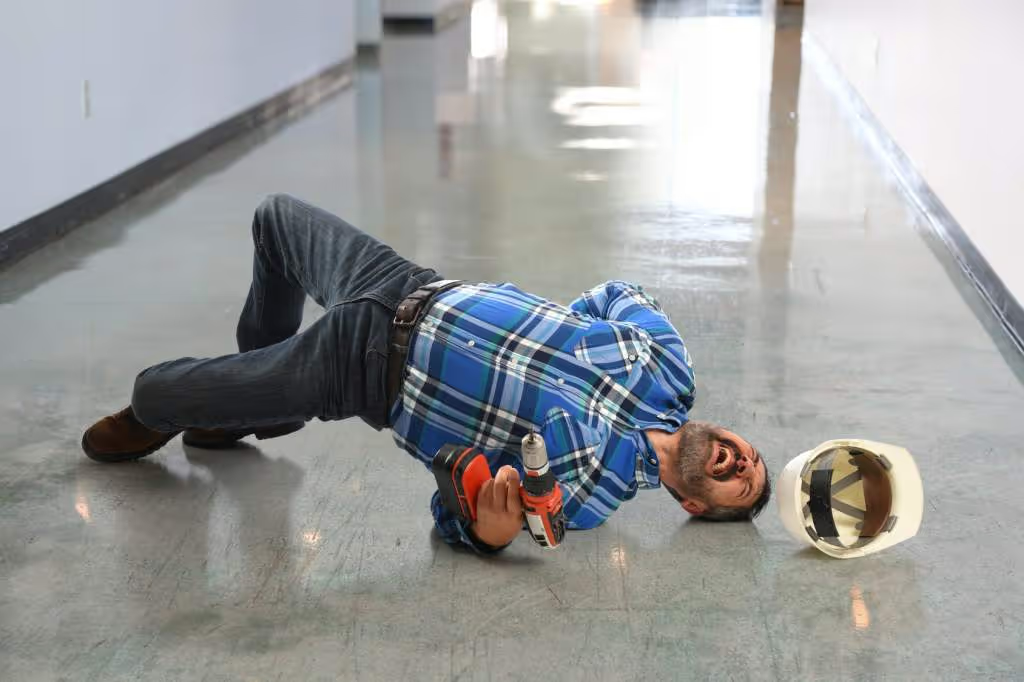
- Slips, trips and falls
- Being struck by a moving object
- Contact with moving machinery
- Falls from height
These categories cover a huge range of situations. But what ties them together is that many of them stem from the same underlying issues: ignoring safety procedures, using equipment incorrectly, or failing to recognise and respond to risk factors in time.
And this is where the human element becomes essential.
What’s Really Behind These Accidents?
At first glance, the top five might seem purely mechanical or procedural. But in reality, human factors play a role in nearly every one of them.
Let’s take a closer look:
- Handling injuries often happen when someone is in a rush or distracted.
- Slips and trips are frequently caused by complacency — someone thinks they’ve walked the same route a hundred times without issue, and they stop paying attention.
- Struck-by accidents can happen when someone isn’t alert or loses focus for just a second.
- Contact with machinery may result from fatigue, causing slower reaction times or missed steps.
- Falls from height might come from a failure to assess the risk properly — often due to overconfidence or distraction.
In other words, these aren’t just physical failures. They’re mental ones, too.
The Top 4 Human Factors: States That Lead to Errors
While the accident types are easy to list, the causes are harder to see. But SafeStart and other behaviour-based safety models have identified four critical states that dramatically increase the likelihood of injury:
- Rushing
- Frustration
- Fatigue
- Complacency
These states influence how people think, act, and make decisions. They lead to critical errors like:
- Eyes not on task
- Mind not on task
- Being in the line of fire
- Loss of balance, traction, or grip
These errors, in turn, dramatically increase the risk of an accident. What’s powerful about this model is that it connects the emotional state to the action — and then to the injury.
A Shift in Safety Thinking
To truly reduce accidents at work, companies need to stop treating statistics as the end goal. Numbers don’t change behaviour — awareness does.
That means giving your workforce tools to recognise and manage these internal states. It means creating a culture where it’s okay to speak up when someone looks distracted or tired. And it means moving from reactive safety to proactive habits that prevent incidents in the first place.
Because behind every accident, there’s a decision. And behind every decision, there’s a state of mind.
Train for that and the numbers will follow.
Published on 09.01.2026
.jpg)
%20(1).jpg)